
SoftWave Therapy Blog: Pain Relief Tips from Winston-Salem
Why SoftWave Therapy and Chiropractic Care Work Better Together
Joints and Soft Tissue: Why Winston-Salem Patients Benefit From Treating Both
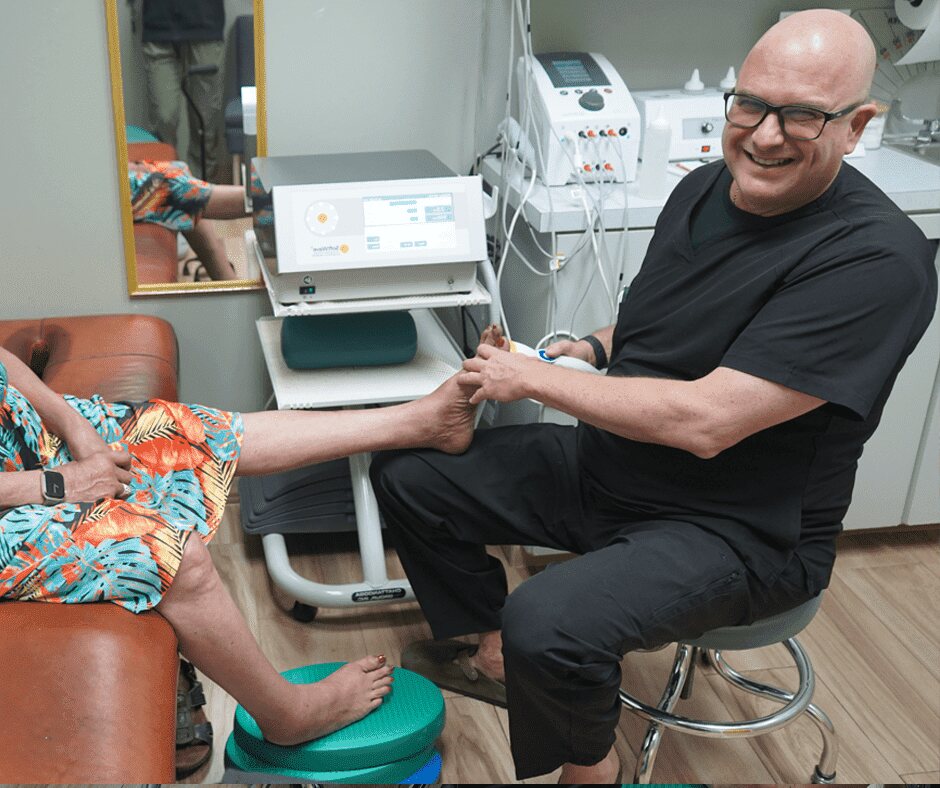
Pain rarely comes from just one structure. A stiff lower back usually involves the joints of the spine and the muscles, ligaments, and fascia around them. A sore shoulder may involve both the joint and the tendons that move it. That is why treating only one piece of the puzzle can leave people feeling better for a while and then right back where they started. At Stoetzel Chiropractic Clinic in Winston-Salem, Dr. John Stoetzel combines chiropractic care with SoftWave Tissue Regeneration Technology (TRT) so patients can address how their joints move and how their soft tissue heals in one coordinated plan.
What Chiropractic Care Does
Chiropractic care focuses on the joints of the spine and extremities and how they move. When a joint is restricted, meaning it is not moving through its normal range, the surrounding muscles often tighten to protect it, and nearby structures may take on extra strain.
A chiropractic adjustment is a controlled, specific movement applied by hand or with an instrument to a joint that is not moving well. The goal is to restore motion to that joint. Many patients report reduced stiffness and easier movement after an adjustment. Chiropractors also commonly use soft tissue techniques, stretching, and exercise recommendations, and they give guidance on posture and daily habits.
Where Chiropractic Care Has Limits
Adjustments are designed to improve how joints move. They are not designed to rebuild a degenerated tendon, repair a chronically irritated ligament, or restore circulation to tissue that has stopped healing. When the soft tissue itself is the main source of the problem, an adjustment may help the area move better, but the underlying tissue may still be sore. That can lead to the frustrating pattern of feeling good after a visit and then noticing the same pain return a few days later.
What SoftWave Does
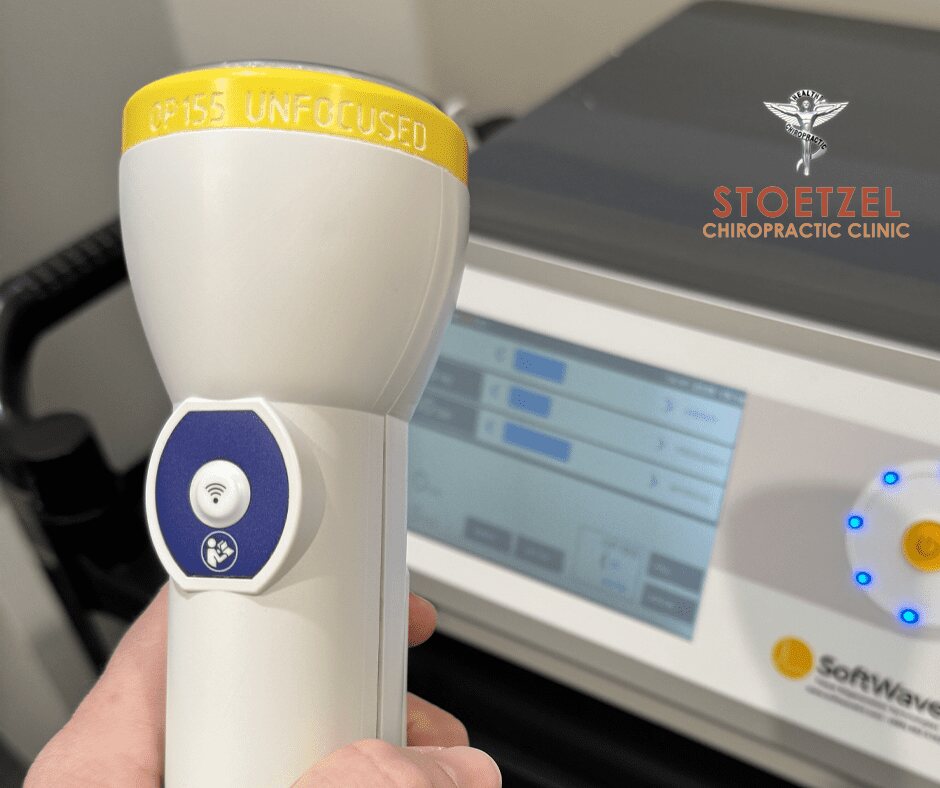
SoftWave TRT focuses on the tissue side of the equation. It uses electrohydraulic, spark-generated broad-focused acoustic waves delivered through a patented parabolic reflector. It is the only broad-focused shockwave technology, so the energy spreads across a wide treatment area and penetrates deeply into muscles, tendons, ligaments, and fascia. The waves are designed to trigger the body's own healing cascade in tissue that has been stuck in a chronic, slow-healing state.
The Science in Plain Language
- Stem cell activation. SoftWave is designed to activate resident stem cells and encourage them to migrate to the treated area.
- New blood vessel growth. Through VEGF and eNOS signaling, it supports angiogenesis and a temporary increase in blood flow, bringing more oxygen and nutrients to tissue.
- Tissue building blocks. PCNA and BMP activity support cell proliferation and collagen production for stronger connective tissue.
- Inflammation balance. The therapy helps modulate inflammation toward a healthy healing pattern.
- Calmer pain signaling. Toll-like receptor regulation may help settle over-active nerve and immune responses.
- Cellular cleanup. SoftWave can help the body clear senescent cells that keep injuries from resolving.
Why the Two Work Better Together
Think of your body as a system of hinges (the joints) and the cables and padding that support them (the soft tissue). If a hinge is stiff, the cables strain. If the cables are damaged, the hinge does not move smoothly. Fixing only one side leaves the other side to drag the problem back.
Combining the two approaches allows each to cover what the other does not:
- Chiropractic care addresses restricted joint motion and the mechanical stress it puts on nearby tissue.
- SoftWave supports healing in the muscles, tendons, ligaments, and fascia around those joints.
- Better movement after an adjustment may help newly stimulated tissue get the healthy, gradual loading it needs to remodel.
- Calmer tissue after SoftWave may make it easier for patients to move comfortably and stay consistent with home exercises.
If you have been treating your pain one piece at a time without lasting results, schedule a visit with Dr. John Stoetzel to see whether a combined SoftWave and chiropractic plan makes sense for you.
Conditions Where a Combined Approach Fits
Every plan is based on an individual evaluation, but a combined approach is often considered for problems where joint mechanics and soft tissue are both involved, such as:
- Chronic low back pain with stiff spinal joints and tight, irritated muscles.
- Neck and upper back pain from desk work, often paired with muscle knots and headaches.
- Shoulder problems where restricted motion and tendon irritation feed each other.
- Hip and SI joint pain involving both the joint and the surrounding gluteal muscles.
- Knee, ankle, and foot pain where altered mechanics keep stressing tendons and ligaments.
What a Combined Plan Looks Like
Your first visit starts with a detailed history and exam. Dr. Stoetzel will check how your joints move, where your soft tissue is tender or restricted, and how your posture and daily activities may be contributing. If anything suggests a condition that needs imaging or a referral to another provider, you will be told.
From there, your plan may include chiropractic adjustments, SoftWave sessions, or both, depending on what your evaluation shows. SoftWave sessions are short, usually about 10 to 15 minutes, with no needles, no medication, and no downtime. A typical SoftWave series runs over roughly six to eight weeks, and healing can continue for weeks to months after the final session. Chiropractic visits are scheduled based on your needs and progress.
Realistic Expectations
A combined approach is not a guarantee, and every patient responds differently. Some people notice changes early, while others with long-standing problems improve more gradually. Results tend to be best when patients also stay active, follow home exercise recommendations, and pay attention to posture and daily habits that keep stressing the same area.
Care Under One Roof
Having both options in one Winston-Salem clinic means your care is coordinated. The same provider who evaluates your joints also understands your soft tissue, so treatment can be adjusted as you improve. SoftWave is FDA-cleared for activation of connective tissue, a temporary increase in blood flow, and the temporary relief of minor muscle and joint pain. It has been studied at leading institutions and is used by clinicians who work with professional and collegiate athletes.
Ready to Take the Next Step?
If your pain keeps returning no matter which single treatment you try, it may be time to address the joints and the soft tissue together. Let Dr. Stoetzel build a plan that looks at the whole picture.
Request your SoftWave Therapy new patient visit online today
Contact Stoetzel Chiropractic Clinic
Stoetzel Chiropractic Clinic
3333 Brookview Hills Blvd, Suite 101
Winston-Salem, NC 27103
Phone: (336) 773-1177
Our Main Office Website: https://winston-salemchiro.com
‹ Back
Recent Posts
-
What FDA Clearance Means for SoftWave Therapy
November 24, 2026
-
SoftWave Therapy Myths vs Facts: What Winston-Salem Patients Should Know
November 19, 2026
-
Why SoftWave Therapy and Chiropractic Care Work Better Together
November 14, 2026
-

-
 3333 Brookview Hills Blvd