
SoftWave Therapy for Shoulder Pain in Winston-Salem, NC
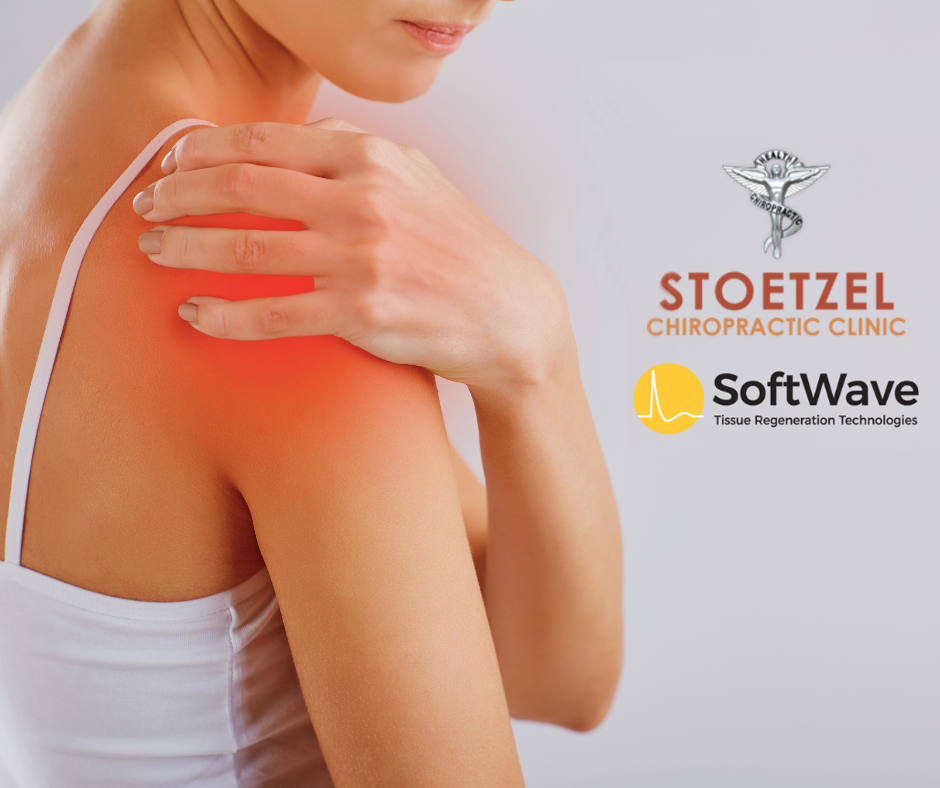
Maybe you can no longer reach the top shelf without a sharp catch, or you wake up at night because rolling onto one side sends a deep ache down your upper arm. Some of our Winston-Salem patients say it started after a weekend of painting or a few rounds of golf, while others cannot point to any one moment. Either way, the pain starts deciding how you sleep, how you dress, and whether you can lift a grandchild.
At Stoetzel Chiropractic Clinic, Dr. John Stoetzel and our team offer SoftWave Tissue Regeneration Therapy (TRT) as a non-surgical, drug-free option for people with stubborn shoulder pain. Our goal is to support the tissues of the shoulder so your body can do the healing work it may have stopped doing on its own.
Common Shoulder Pain Problems We See
The shoulder is the most mobile joint in the body, relying on a small group of tendons to keep the ball of the upper arm centered in a shallow socket. That design is great for reaching and throwing, but it leaves room for trouble. Here is what we see most often:
- Rotator cuff tendinopathy: wear and irritation of the four tendons that steady the shoulder, often felt on the outside of the upper arm.
- Partial rotator cuff tears: frayed tendon fibers that cause weakness when lifting the arm out to the side.
- Shoulder impingement: pinching of tendons and bursa under the bony roof of the shoulder, worse with overhead reaching.
- Calcific tendinitis: calcium deposits inside a rotator cuff tendon that can cause intense pain.
- Biceps tendinitis: pain at the front of the shoulder where the biceps tendon runs through a groove in the arm bone.
- Frozen shoulder (adhesive capsulitis): a thickened, tight joint capsule that limits motion in every direction.
- Shoulder bursitis: an inflamed fluid sac that makes lying on that side painful.
- Shoulder arthritis and old injuries: worn joint surfaces or past dislocations that never fully settled.
Why Shoulder Pain Often Lingers
Tendons around the shoulder have a modest blood supply compared to muscle, and parts of the rotator cuff are known for limited circulation. Less blood flow means fewer nutrients and repair cells, so a small strain can get stuck in a cycle of low-grade irritation, scar tissue, and weakness. We also use our shoulders constantly, from driving to carrying groceries, so true rest is hard. When we do rest, the shoulder can stiffen instead.
Rest, ice, anti-inflammatory medication, and cortisone injections all have their place and may calm pain for a while. They generally do not rebuild the tendon or restore circulation, which is why many people find the pain returns once a shot wears off. Exercise and rehab remain important, and SoftWave is designed to work alongside them.
How SoftWave Therapy Helps Shoulder Pain
SoftWave TRT uses electrohydraulic, broad-focused acoustic waves created by a patented parabolic reflector. This broad-focused wave reaches a wide area of tissue at depth, which matters in a shoulder where the problem often involves several overlapping tendons, the bursa, and the capsule at once. In plain language, it is designed to:
- Wakes up resident stem cells: SoftWave is designed to activate the body's own repair cells and encourage them to move toward injured rotator cuff and biceps tissue.
- Builds new blood vessels: by triggering signals such as VEGF and eNOS, the therapy supports angiogenesis, the growth of new small blood vessels, which can bring more circulation to tendons that tend to be underserved.
- Calms stuck inflammation: rather than simply shutting inflammation down, SoftWave helps modulate it so the healing process can move forward instead of staying irritated.
- Clears worn-out cells: the treatment supports clearance of senescent cells, older cells that have stopped functioning well and may keep a chronic problem going.
- Quiets pain signals: through regulation of toll-like receptors, SoftWave may help calm overactive nerve signaling, which many patients report as easier sleep and more comfortable reaching.
SoftWave is FDA-cleared for activation of connective tissue, temporary increase in blood flow, and temporary relief of minor muscle and joint pain. Every shoulder is different, so Dr. Stoetzel will look at your specific situation and talk honestly about whether SoftWave is a good fit.
What to Expect at Your Visit
Your first step is our $49 SoftWave Discovery Visit for new patients, a one-on-one consultation focused on your main pain areas. We will talk about what movements bother your shoulder and what you have tried, then check your range of motion and strength.
If SoftWave makes sense for you, each session takes about 10 to 15 minutes while the applicator moves over the front, side, and back of the shoulder. There are no needles, medications, or downtime, so many people drive over from Clemmons or across town and head right back to their day. Most shoulder plans involve a series of sessions over roughly 6 to 8 weeks, and because SoftWave works by starting a healing process, improvement often continues for weeks to months after your last session.
If your shoulder has been holding you back, we would be glad to take a look. Request your SoftWave Discovery Visit online and we will contact you to find a time that works.
Shoulder Pain Articles from Our Blog
- Shoulder Pain Relief in Winston-Salem with SoftWave Tissue Regeneration Technology at Stoetzel Chiropractic Clinic
- Rotator Cuff Tear Pain Relief & Tissue Regeneration with SoftWave Therapy in Winston-Salem at Stoetzel Chiropractic Clinic
- Calcific Tendinitis of the Shoulder: How SoftWave Therapy Can Help Without Surgery
- Frozen Shoulder and Limited Range of Motion: A Non-Surgical SoftWave Approach
- Biceps Tendinitis and Front-of-Shoulder Pain: A Non-Surgical SoftWave Approach
- SoftWave Therapy vs. Steroid Injections for Osteoarthritis Pain Relief: A Better Long-Term Solution
Frequently Asked Questions
Can SoftWave help if I have already had a cortisone shot in my shoulder?
Yes, many of our shoulder patients come to us after cortisone injections. A shot may calm pain for a while, but it is not designed to rebuild tendon tissue. SoftWave supports circulation and the body's repair process instead. We will ask when your last injection was so we can time your sessions sensibly.
Is SoftWave an option for a rotator cuff tear?
For many partial tears and frayed, degenerated tendons, SoftWave may help reduce pain and support healing. Large, full-thickness tears with significant weakness may need a surgical opinion, and Dr. Stoetzel will tell you plainly if he thinks that is the case. Some patients also use SoftWave to support recovery after a surgeon has cleared them.
Will SoftWave help a frozen shoulder move again?
Frozen shoulder tends to improve slowly. The goal with SoftWave is to calm pain and support the tight connective tissue so stretching is easier to tolerate, and many patients report working on their range of motion more comfortably.
Does the treatment hurt?
Most people describe a tapping or mild pulsing. Tender spots may feel more noticeable, and we adjust the intensity to keep you comfortable.
Schedule Your SoftWave Consultation in Winston-Salem
You do not have to keep sleeping on one side or avoiding the top shelf. Let us find out what is behind your shoulder pain and whether SoftWave can help you get back to reaching, lifting, and swinging with confidence.
Request your $49 SoftWave Discovery Visit today
Stoetzel Chiropractic Clinic
3333 Brookview Hills Blvd, Suite 101
Winston-Salem, NC 27103
Phone: (336) 773-1177
 3333 Brookview Hills Blvd