


SoftWave Therapy Blog: Pain Relief Tips from Winston-Salem
SI Joint Pain: The Low Back Pain That Is Not Coming From Your Spine

Is Your Low Back Pain Really Coming From Your SI Joint? A Winston-Salem Guide
You have a nagging ache low in your back, off to one side, right around the dimple above your buttock. It flares when you stand up after sitting, climb stairs, or roll over in bed. Maybe you have had a lumbar MRI, been told about a bulging disc, and tried treatments aimed at your spine without much change. If that sounds familiar, there is a real possibility that your pain is not coming from your spine at all, but from the sacroiliac joint, often called the SI joint.
At Stoetzel Chiropractic Clinic in Winston-Salem, NC, Dr. John Stoetzel and his team evaluate low back and pelvic pain with an eye toward finding where it truly starts. For SI joint pain, one of the tools they use is SoftWave Tissue Regeneration Technology (TRT), a non-invasive therapy designed to support the body's own healing in the ligaments and soft tissues around the joint.
What Is the SI Joint?
Your pelvis is made up of a triangular bone at the base of your spine, called the sacrum, and two large hip bones, called the ilia. Where the sacrum meets each hip bone, on the left and right, is a sacroiliac joint.
Unlike your knee or shoulder, the SI joints are built for stability rather than big movement. They move only a small amount, and they are wrapped in some of the strongest ligaments in the body. Their main job is to transfer the weight of your upper body down into your legs and to absorb force when you walk, run, and lift. When those joints move too much, too little, or unevenly, or when the ligaments that support them become irritated, pain can follow.
Signs That Point Toward the SI Joint
- Pain mostly on one side of the low back or upper buttock, below the waistline
- A spot you can point to with one finger just beside the bony bump at the back of the pelvis
- Discomfort climbing stairs, standing on one leg, or taking long strides
- Ache that can spread into the buttock, groin, or back of the thigh
Why SI Joint Pain Gets Mistaken for Spine Pain
The SI joint sits so close to the lower spine that the two are easy to confuse. Both can cause pain in the low back and buttock, and both can send pain into the leg. To complicate matters, many adults have disc changes on an MRI that may not be causing any symptoms at all. When imaging shows a bulging disc, it is natural to treat the disc, even if the real problem is a few inches lower.
There is no single perfect test for SI joint pain. Clinicians usually rely on a careful history, the location of the pain, and a combination of hands-on tests that stress the joint in different ways. When several of those tests reproduce your familiar pain, the SI joint becomes a stronger suspect.
What Causes SI Joint Pain?
- Pregnancy and childbirth: Hormonal changes loosen the pelvic ligaments, and the added weight and altered posture place more stress on the joints.
- Falls and impacts: Landing hard on your buttock, a missed step, or a car accident can strain the joint and its ligaments.
- Uneven loading: A leg length difference, a limp, or an old ankle or knee injury can shift more force to one side.
- Prior lumbar fusion: When part of the spine is fused, more movement and stress can transfer to the SI joints.
Some forms of SI joint inflammation are related to inflammatory conditions, such as axial spondyloarthritis. Morning stiffness that lasts a long time and improves with movement, especially in younger adults, deserves a medical evaluation.
Conventional Options and Their Limits
Standard care for SI joint pain may include pain relievers and anti-inflammatory medication, physical therapy focused on core and hip stabilization, a pelvic support belt, chiropractic adjustments, steroid injections into the joint, radiofrequency procedures to quiet the nerves, and for a small number of persistent cases, SI joint fusion surgery.
Many of these have value. Injections and nerve procedures may calm pain, but they do not repair the stretched or irritated ligaments that often keep the joint unstable and sore. Surgery permanently changes how the pelvis works and involves a meaningful recovery. For many people, there is a gap between managing the pain and actually helping the tissue heal.
How SoftWave Helps SI Joint Pain
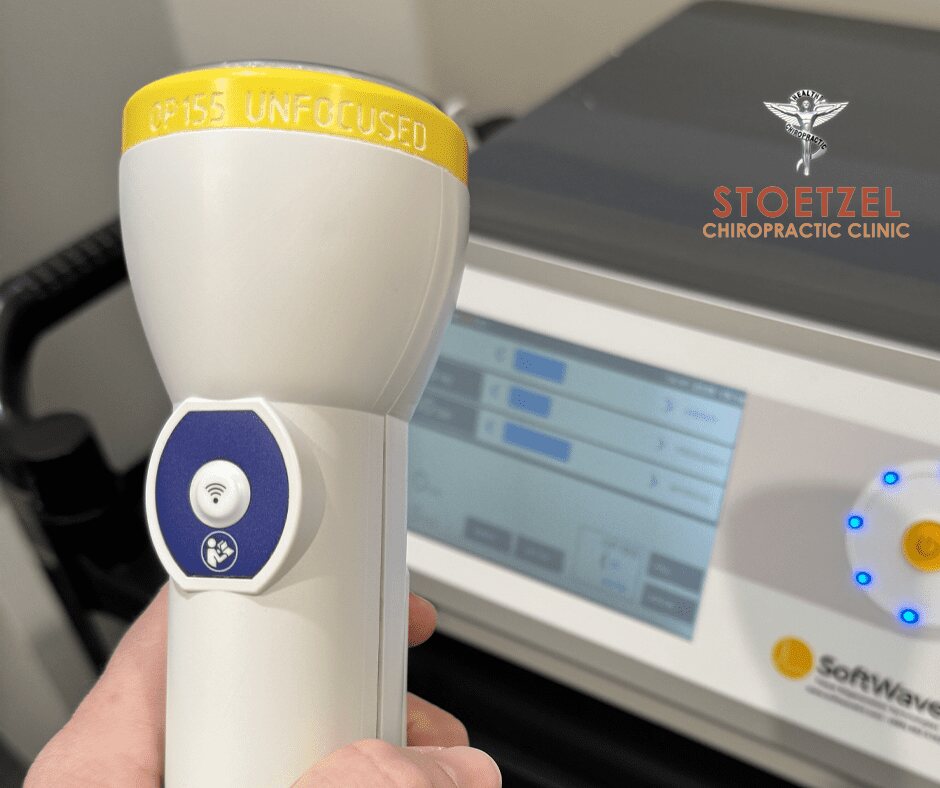
SoftWave TRT uses electrohydraulic, spark-generated broad-focused acoustic waves delivered through a patented parabolic reflector. As the only broad-focused shockwave technology, it can reach deep into tissue and cover the broad area around the back of the pelvis, including the strong ligaments that support the SI joint and the gluteal muscles nearby. The waves are designed to trigger the body's own healing cascade in tissue that has stalled.
If one-sided low back pain has not responded to treatment aimed at your spine, it may be time to look lower. Request a SoftWave Therapy consultation with Dr. John Stoetzel in Winston-Salem today.
The Science in Plain Language
- More blood flow: Ligaments have a limited blood supply. SoftWave is designed to support angiogenesis, the growth of new blood vessels, through signals such as VEGF and eNOS, along with a temporary increase in circulation.
- Repair cell activation: The therapy can prompt the body's resident stem cells to activate and move to the area.
- Connective tissue support: Factors like PCNA and BMP support cell proliferation and collagen, the main building block of ligaments.
- Calmer inflammation: SoftWave helps modulate inflammation so it moves toward healing.
- Quieter pain signals: Through toll-like receptor regulation, it may help settle over-active nerve and immune activity that keeps pain going.
What to Expect
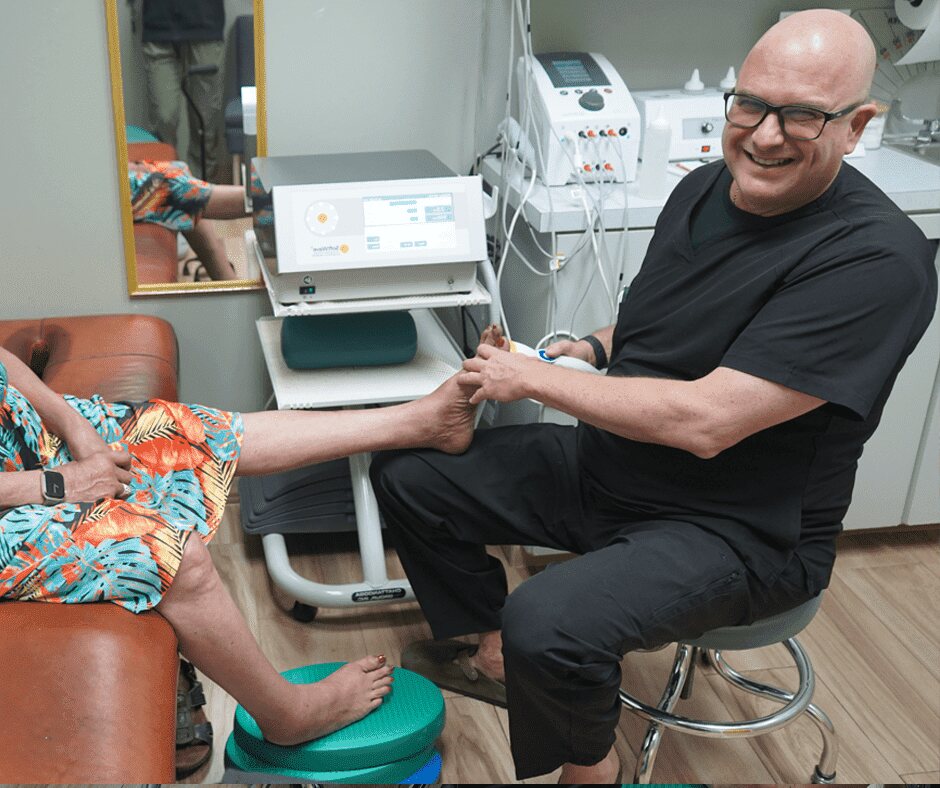
SoftWave is non-invasive, with no needles, no drugs, no surgery, and no downtime. Sessions typically take about 10 to 15 minutes, and most patients complete a series over roughly 6 to 8 weeks. Because SoftWave works through the body's repair processes, improvement tends to build over time, and healing can continue for weeks to months after the final session.
For SI joint pain, SoftWave often fits well alongside chiropractic care and stabilization exercise. Dr. Stoetzel may combine SoftWave with gentle adjustments to improve pelvic motion, guidance on core and glute strengthening, and practical advice about sitting, lifting, and sleeping positions that reduce stress on the joint.
Realistic Expectations
SI joint pain can be stubborn, and no treatment can guarantee a specific result. Every case is different. SoftWave is designed to support your body's natural healing and to complement, not replace, appropriate medical care. Low back pain that comes with numbness in the groin area, changes in bowel or bladder control, fever, unexplained weight loss, or significant leg weakness needs prompt medical attention. For the common, one-sided ache around the back of the pelvis, many patients report meaningful improvement in comfort and daily movement.
Learn more: SoftWave Therapy for Back Pain in Winston-Salem
Ready to Take the Next Step?
If you have been treating your spine without relief, an evaluation focused on your SI joint may finally point you in the right direction. Let Dr. Stoetzel find the true source of your pain and explain whether SoftWave Therapy can help.
Request your SoftWave Therapy new patient visit online today
Contact Stoetzel Chiropractic Clinic
Stoetzel Chiropractic Clinic
3333 Brookview Hills Blvd, Suite 101
Winston-Salem, NC 27103
Phone: (336) 773-1177
Our Main Office Website: https://winston-salemchiro.com
‹ Back
Recent Posts
-
What FDA Clearance Means for SoftWave Therapy
November 24, 2026
-
SoftWave Therapy Myths vs Facts: What Winston-Salem Patients Should Know
November 19, 2026
-
Why SoftWave Therapy and Chiropractic Care Work Better Together
November 14, 2026
-

-
 3333 Brookview Hills Blvd