
SoftWave Therapy Blog: Pain Relief Tips from Winston-Salem
Shin Splints That Keep Coming Back: How SoftWave Therapy Helps Winston-Salem Runners Heal

Why Do My Shin Splints Keep Coming Back? Help for Winston-Salem Runners
You build up your miles, the runs start to feel good, and then the familiar ache shows up along the inside of your shin. You back off, it fades, you start again, and a few weeks later it is back. For many runners who log their miles on the Salem Lake Trail, the Muddy Creek Greenway, or neighborhood streets around Winston-Salem, shin splints become a cycle that never quite ends. It usually means the tissue along your shinbone has never been given the chance to fully recover and adapt.
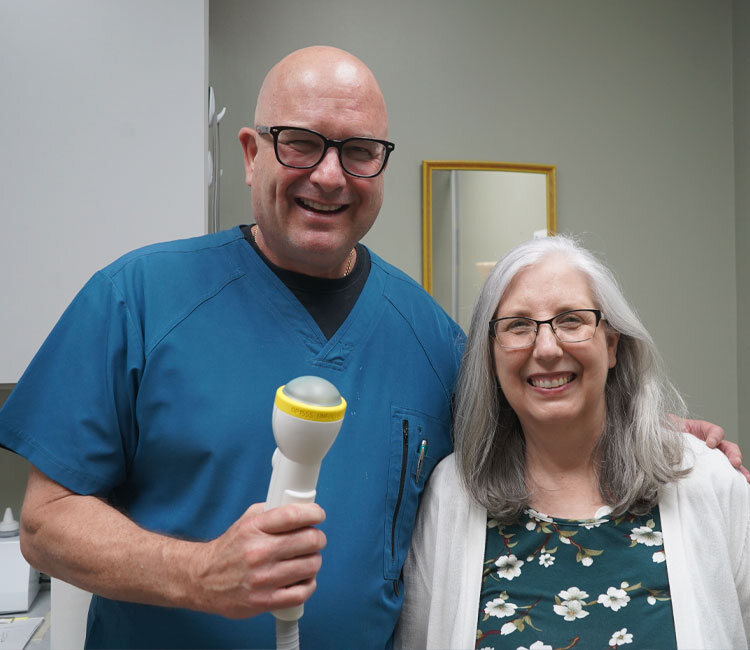
At Stoetzel Chiropractic Clinic in Winston-Salem, NC, Dr. John Stoetzel and his team work with runners and active adults who are tired of starting over. One of the tools they use is SoftWave Tissue Regeneration Technology (TRT), a non-invasive therapy designed to support the body's own healing in irritated, overloaded tissue.
What Are Shin Splints?
Shin splints is a general term for pain along the shinbone (the tibia). The most common form, known medically as medial tibial stress syndrome, causes pain along the inner edge of the lower half of the shin. Several muscles of the lower leg, including the soleus and the deep muscles that support the arch of the foot, attach along this border of the bone. Each step pulls on those attachments and bends the bone very slightly.
In healthy training, the bone and the tissue around it respond to that stress by getting stronger. When the load increases faster than the body can adapt, the thin layer covering the bone (the periosteum) and the muscle attachments become irritated, and the bone itself can become stressed. The result is a diffuse, tender ache that often runs several inches along the shin rather than sitting in one tiny spot.
Shin Splints or Something More?
Not all shin pain is the same, and some causes need different care. It is important to rule these out:
- Stress fracture: Pain that is sharp and focused in one small spot, hurts with hopping, or aches even at rest or at night may indicate a stress fracture, which usually needs imaging and a period of protected rest.
- Exertional compartment syndrome: A tight, building pressure in the leg during exercise, sometimes with numbness or tingling in the foot, that eases shortly after stopping is a different problem that needs medical evaluation.
Dr. Stoetzel will look at your history and examine your legs carefully, and he will recommend further testing or a referral when the picture suggests something other than typical shin splints.
Why Shin Splints Keep Coming Back
Recurring shin splints usually come down to a mismatch between how much load the leg receives and how much it is ready to handle. Common contributors include:
- Too much, too soon. Jumping your weekly mileage, adding speed work and hills at the same time, or training for a race on a tight timeline.
- Worn or poorly matched shoes. Shoes lose cushioning over time, and a sudden change in footwear can alter loading.
- Foot mechanics. Flat feet or feet that roll inward heavily can increase pull on the inner shin.
- Weak calves and hips. When the muscles that absorb shock are not strong enough, more of the impact lands on the bone and its attachments.
Here is the key point: rest calms the symptoms, but it does not automatically rebuild the tissue's capacity. If you return to the same training load on tissue that has quieted down but not truly recovered, the pain is likely to return.
Conventional Treatment and Its Limits
Standard advice for shin splints includes rest or reduced running, ice, anti-inflammatory medication, supportive shoes or orthotics, compression, and a gradual return to training. Strengthening the calves, feet, and hips, along with improving running form, are important long-term pieces of the puzzle.
These approaches are reasonable and often help, but they have limits. Ice and medication only ease symptoms. Shoes and orthotics change how force is distributed, but they do not repair irritated tissue. Rest works until you start running again. Many runners follow every step of this plan and still find themselves stuck in the same loop each training season.
How SoftWave Helps Runners Heal
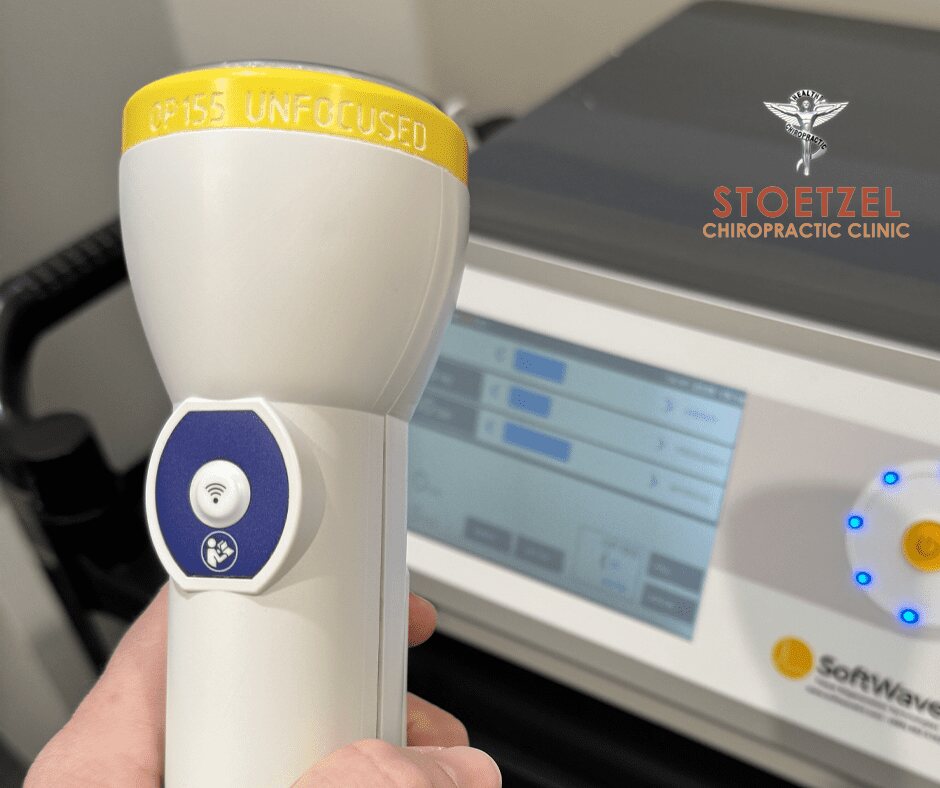
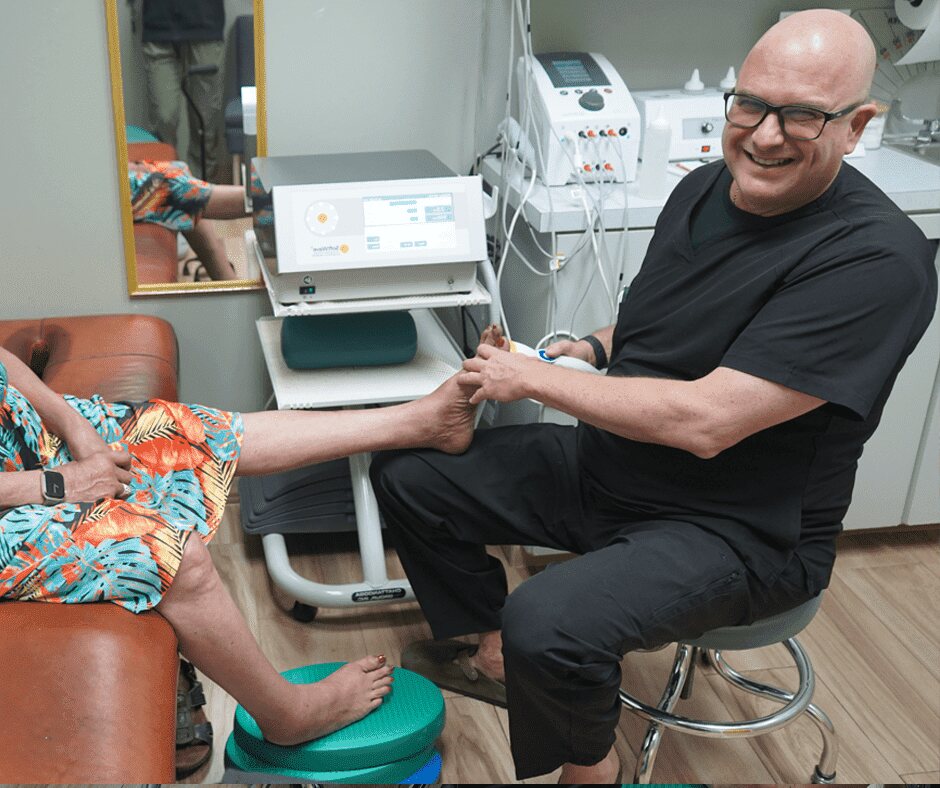
SoftWave TRT uses electrohydraulic, spark-generated broad-focused acoustic waves delivered through a patented parabolic reflector. As the only broad-focused shockwave technology, it can cover a wide treatment area and reach deep into tissue, which suits a condition like shin splints where the irritation often runs along a long stretch of the shin. The goal is not to numb the area but to restart the body's own repair processes.
If shin pain keeps interrupting your training in Winston-Salem, you do not have to keep starting from zero. Request a SoftWave Therapy consultation with Dr. John Stoetzel today.
The Science in Plain Language
- Improved circulation: SoftWave is designed to support angiogenesis, the growth of new blood vessels, through signals like VEGF and eNOS, as well as a temporary increase in blood flow to the treated area.
- Activating repair cells: It can prompt the activation and migration of your body's resident stem cells.
- Tissue rebuilding: Factors such as PCNA and BMP support cell proliferation and collagen production, helping the body rebuild healthy connective tissue.
- Calmer inflammation: The therapy helps modulate inflammation so it supports healing instead of lingering.
- Settled pain signals: Through toll-like receptor regulation, SoftWave may help calm the over-active nerve and immune signaling that keeps a recurring injury sore.
What Treatment Looks Like
SoftWave is non-invasive, with no needles, no drugs, no surgery, and no downtime. Sessions typically take about 10 to 15 minutes. Most patients complete a series of treatments over roughly 6 to 8 weeks, and because the therapy works through biological repair, healing can continue for weeks to months after the last session.
Dr. Stoetzel will help you decide how much running makes sense while you are in care. For some runners that means a reduced schedule on softer surfaces. For others it means cross-training on a bike or in the pool for a while. The aim is to keep you active without repeatedly overloading the shin while it heals.
Building a Plan That Breaks the Cycle
SoftWave is one part of a bigger picture. To keep shin splints from returning, many runners benefit from:
- A gradual, planned increase in weekly mileage rather than big jumps
- Calf, foot, and hip strengthening to help muscles absorb more of the impact
- Chiropractic evaluation of how the feet, knees, hips, and pelvis move together while running
Setting Realistic Expectations
Every runner and every leg is different, and no treatment can guarantee that shin splints will never return. SoftWave is designed to support your body's natural healing, not to replace medical care or a smart training plan. If a stress fracture is suspected, that needs to be addressed first. For the common, recurring ache of medial tibial stress syndrome, many patients report that combining SoftWave with better training habits helps them get back to consistent running with more confidence.
Learn more: SoftWave Therapy for Sports Injuries in Winston-Salem
Ready to Take the Next Step?
If you are tired of building up your miles only to be sidelined by the same shin pain, a focused plan may help you finally break the cycle. Let Dr. Stoetzel evaluate your legs and your training and explain whether SoftWave Therapy is right for you.
Request your SoftWave Therapy new patient visit online today
Contact Stoetzel Chiropractic Clinic
Stoetzel Chiropractic Clinic
3333 Brookview Hills Blvd, Suite 101
Winston-Salem, NC 27103
Phone: (336) 773-1177
Our Main Office Website: https://winston-salemchiro.com
‹ Back
Recent Posts
-
What FDA Clearance Means for SoftWave Therapy
November 24, 2026
-
SoftWave Therapy Myths vs Facts: What Winston-Salem Patients Should Know
November 19, 2026
-
Why SoftWave Therapy and Chiropractic Care Work Better Together
November 14, 2026
-

-
 3333 Brookview Hills Blvd