


SoftWave Therapy Blog: Pain Relief Tips from Winston-Salem
Patellar Tendonitis (Jumper's Knee): Non-Surgical Relief with SoftWave Therapy in Winston-Salem
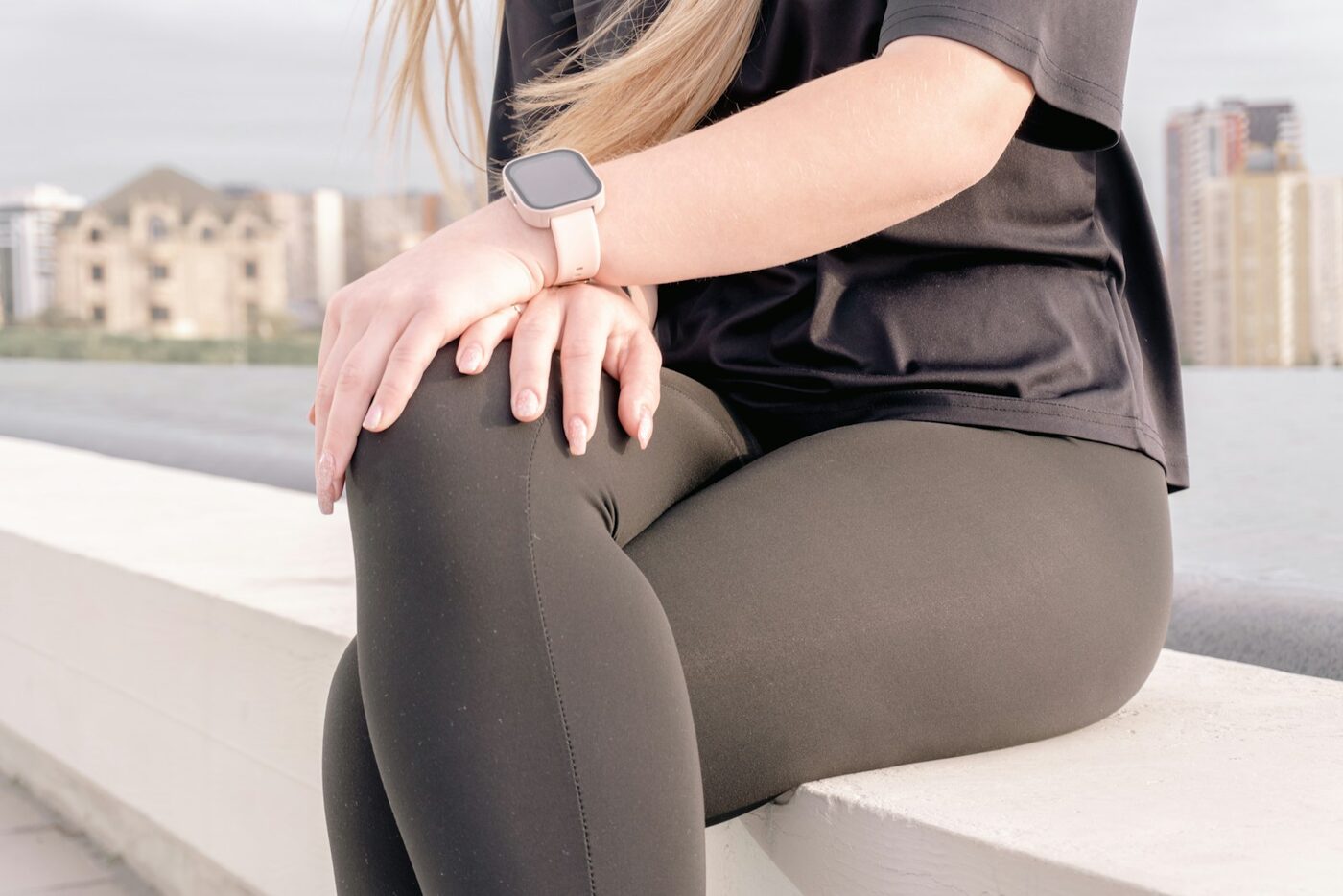
Pain Just Below the Kneecap? Understanding Jumper's Knee in Winston-Salem
If the front of your knee aches every time you jump, climb stairs, squat down, or stand up after a long drive, you may be dealing with patellar tendonitis, often called jumper's knee. It is common among basketball and volleyball players, runners, and the growing number of Winston-Salem adults who have taken up pickleball. The frustrating part is how stubborn it can be. Many people rest for a few weeks, feel better, return to activity, and find the same sharp spot under the kneecap waiting for them.
At Stoetzel Chiropractic Clinic in Winston-Salem, NC, Dr. John Stoetzel and his team help patients with nagging tendon pain using SoftWave Tissue Regeneration Technology (TRT). This non-invasive, drug-free therapy is designed to support the body's own repair processes in tendons that have stopped healing well on their own. To understand why it may help, it is worth looking at what is actually going on inside a painful patellar tendon.
What Is Patellar Tendonitis?
The patellar tendon is a short, thick band of tissue that connects the bottom of your kneecap (the patella) to a bump on the front of your shinbone called the tibial tuberosity. Together with the large quadriceps muscles on the front of your thigh, it forms the system that straightens your knee. Every time you jump, land, climb, sprint, or rise from a squat, that tendon absorbs and transfers a large amount of force.
When the tendon is loaded more than it can recover from, small areas of damage build up faster than the body can repair them. Early on there may be some genuine inflammation, which is where the name tendonitis comes from. In longer-lasting cases, though, the tendon often looks less inflamed and more worn: the collagen fibers become disorganized, the tissue thickens, and the area may develop abnormal small blood vessels and nerve endings. Many clinicians now call this patellar tendinopathy because it better describes a tendon that is struggling to heal rather than one that is simply inflamed.
Common Signs of Jumper's Knee
- Pain at the bottom edge of the kneecap that you can often point to with one finger.
- Pain that warms up and then returns. Many people notice soreness at the start of activity that eases, then comes back stronger afterward or the next morning.
- Trouble with stairs, squatting, and jumping, especially going down stairs or landing from a jump.
- Stiffness after sitting, such as standing up after a movie, a long workday at a desk, or a drive down Business 40.
What Causes Patellar Tendon Pain?
Jumper's knee is usually an overload problem rather than a single injury. Several factors can tip the balance:
- Sudden changes in training. Adding more games, more jumping, more hills, or a new sport too quickly is one of the most common triggers.
- Repetitive jumping and landing. Basketball, volleyball, tennis, pickleball, and running all place heavy, repeated demand on the tendon.
- Muscle tightness and weakness. Tight quadriceps or hamstrings and weak hip and thigh muscles can change how force travels through the knee.
- Movement patterns. Landing stiff-legged or with the knees collapsing inward can concentrate stress on the tendon.
Because tendons have a relatively limited blood supply compared with muscles, they tend to recover slowly. That is one reason a tendon that has been irritated for months often does not settle down with rest alone.
Conventional Options and Their Limits
There are several standard approaches to patellar tendinopathy, and many of them have a useful place in care. It helps to understand what each one does well and where it falls short.
- Rest and activity changes can calm a flare, but complete rest also weakens the tendon, so pain often returns once you go back to your sport.
- Ice and anti-inflammatory medication may ease soreness for a while, yet they do not rebuild disorganized tendon tissue.
- Progressive strengthening of the quadriceps and hips is one of the most important parts of recovery. It works, but it takes consistent effort over months, and pain can make it hard to stick with.
- Steroid injections are generally approached with caution around load-bearing tendons, because they can quiet pain without improving tendon quality.
- Surgery is usually reserved for cases that have not responded to extended conservative care, and it comes with a long rehabilitation period.
How SoftWave Helps Jumper's Knee
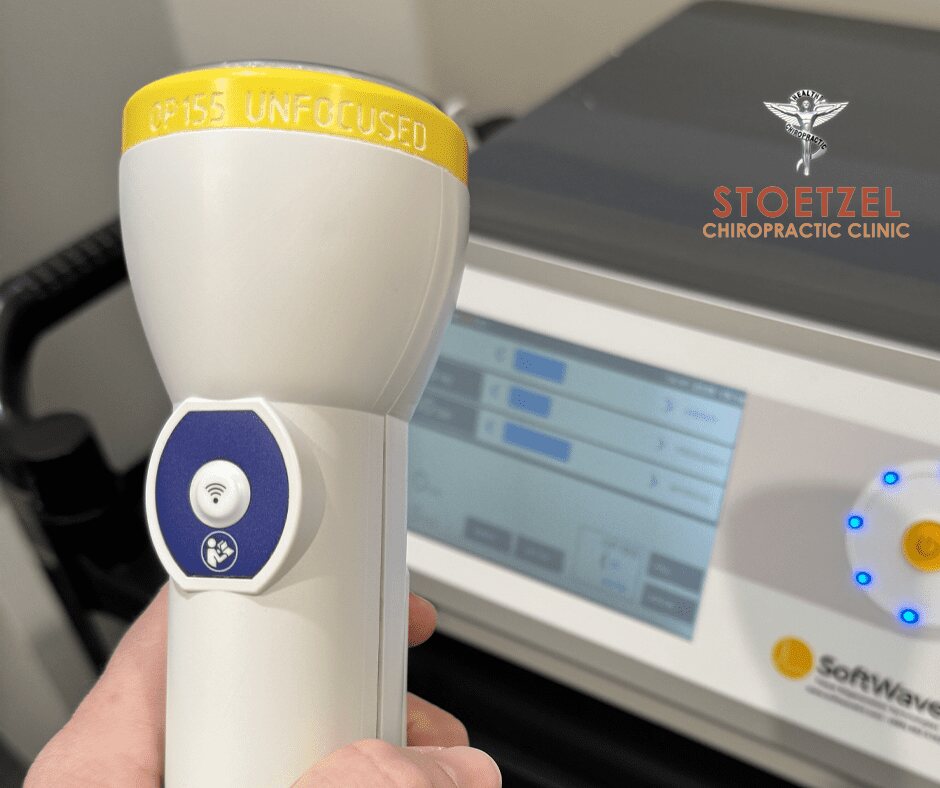
SoftWave TRT uses electrohydraulic, spark-generated broad-focused acoustic waves delivered through a patented parabolic reflector. It is the only broad-focused shockwave technology, which allows the energy to reach deep into tissue and cover the full length of the patellar tendon and the surrounding area rather than a single small point. These waves are designed to trigger the body's own healing cascade in tissue that has stalled.
If jumper's knee is keeping you off the court, the trail, or the stairs in Winston-Salem, you do not have to keep playing through it. Request a SoftWave Therapy consultation with Dr. John Stoetzel today.
The Science in Plain Language
- Better blood flow: SoftWave is designed to encourage angiogenesis, the growth of new blood vessels, through signals such as VEGF and eNOS, along with a temporary increase in circulation. For a tendon with limited blood supply, that matters.
- Activation of repair cells: The therapy can prompt your body's resident stem cells to activate and migrate to the treated area.
- Collagen and tissue support: Factors like PCNA and BMP support cell proliferation and collagen production, the raw material of healthy tendon.
- Calmer inflammation: SoftWave helps modulate the inflammatory response so it can move toward productive healing.
- Quieter pain signaling: Through toll-like receptor regulation, it may help settle the nerve and immune over-activity that keeps a chronic tendon sore.
What to Expect During Treatment
SoftWave sessions are quick and straightforward. There are no needles, no drugs, no surgery, and no downtime. A typical session lasts about 10 to 15 minutes, and most patients complete a series of treatments over roughly 6 to 8 weeks. Because SoftWave works by stimulating biological repair, improvement usually builds gradually, and healing can continue for weeks to months after the final session.
SoftWave Works Best Alongside Smart Loading
SoftWave is not a replacement for good rehabilitation. It is designed to complement it. Many patients find that when the tendon is less painful, strengthening work becomes easier to tolerate and more productive. A well-rounded plan may include:
- Gradual, progressive quadriceps strengthening as guided by your provider
- Hip and glute strengthening to improve knee alignment during landing
- A sensible return-to-sport schedule rather than jumping straight back into full play
- Chiropractic evaluation of how the hips, pelvis, and lower back influence knee mechanics
Realistic Expectations
Patellar tendinopathy can take time to resolve, especially if it has been building for a long while. No treatment can promise an instant fix or guarantee a particular result, and individual outcomes vary. SoftWave is meant to support your body's natural healing, not to replace appropriate medical care. If your knee pain started with a sudden pop, significant swelling, or an inability to straighten your leg, it is important to have it evaluated promptly, because those signs can point to a different injury. For the typical slow-building ache below the kneecap, many patients report meaningful improvement in comfort and function as their tendon heals.
Learn more: SoftWave Therapy for Knee Pain in Winston-Salem
Ready to Take the Next Step?
If the pain below your kneecap keeps returning every time you get back to the game, a focused, non-surgical plan may help you get moving again. Let Dr. Stoetzel evaluate your knee and explain whether SoftWave Therapy is a good fit.
Request your SoftWave Therapy new patient visit online today
Contact Stoetzel Chiropractic Clinic
Stoetzel Chiropractic Clinic
3333 Brookview Hills Blvd, Suite 101
Winston-Salem, NC 27103
Phone: (336) 773-1177
Our Main Office Website: https://winston-salemchiro.com
‹ Back
Recent Posts
-
What FDA Clearance Means for SoftWave Therapy
November 24, 2026
-
SoftWave Therapy Myths vs Facts: What Winston-Salem Patients Should Know
November 19, 2026
-
Why SoftWave Therapy and Chiropractic Care Work Better Together
November 14, 2026
-
-
 3333 Brookview Hills Blvd