


SoftWave Therapy Blog: Pain Relief Tips from Winston-Salem
Muscle Knots and Myofascial Pain: How SoftWave Therapy Releases Stubborn Tension

That Knot in Your Shoulder That Never Lets Go: Myofascial Pain Relief in Winston-Salem
Almost everyone has felt it: a tight, tender spot between the shoulder blades, along the top of the shoulder, or in the low back that aches no matter how much you stretch. For some people in Winston-Salem, those knots come and go. For others, they settle in for months, sending dull pain into the neck, head, or arm and making long workdays and restless nights even harder. At Stoetzel Chiropractic Clinic, Dr. John Stoetzel uses SoftWave Tissue Regeneration Technology (TRT) to help patients address stubborn muscle tension at a deeper level than a quick rubdown can reach.
What Is a Muscle Knot, Really?
The common term "muscle knot" usually refers to what clinicians call a myofascial trigger point. It is a small, tight, irritable spot within a band of muscle. When pressed, it is often tender, and it can produce pain somewhere else entirely. A trigger point in the upper trapezius, for example, may cause a headache behind the eye. One in the gluteal muscles may feel like sciatica down the back of the leg.
Muscles are wrapped in fascia, a web of connective tissue that surrounds and connects them. When muscle and fascia become tight and irritated together, the result is called myofascial pain. It is not simply a muscle that needs a stretch. It is a region of tissue that has become sensitized, restricted, and slow to recover.
Signs You May Be Dealing With Myofascial Pain
- A deep, aching pain that is hard to pinpoint.
- Tender spots that feel like small lumps or tight cords under the skin.
- Pain that spreads to another area when a spot is pressed.
- Stiffness and reduced range of motion, especially in the morning or after sitting.
- Tension headaches or neck pain that keep returning.
Why Knots Form and Keep Coming Back
Trigger points are thought to develop when a portion of a muscle stays contracted and overworked. Inside that tight zone, local blood flow can decrease, which means less oxygen arrives and waste products are cleared more slowly. The area becomes irritated, and the nervous system becomes more sensitive to it. That sensitivity can make the muscle guard even more, creating a cycle of tension, poor circulation, and pain.
Common triggers include:
- Posture and desk work. Hours at a computer or looking down at a phone load the neck and upper back.
- Repetitive tasks. Lifting, reaching, or performing the same movement at work or in the yard.
- Old injuries. Muscles around a past strain or joint problem often stay guarded long after the original injury.
- Stress and poor sleep. Both can increase muscle tension and lower your tolerance for pain.
- Joint restrictions. When nearby joints do not move well, surrounding muscles may work overtime to compensate.
Conventional Options and Their Limits
There are many ways to work on muscle knots, and several can help. The challenge is that relief is often temporary when the underlying tissue stays irritated.
- Massage and foam rolling can feel great and loosen tissue for a while, but chronic knots often return within days.
- Stretching is helpful for flexibility, yet a sensitized trigger point may not release with stretching alone.
- Heat and topical creams offer comfort but do not change the tissue itself.
- Muscle relaxants and pain relievers may take the edge off, though they can cause drowsiness and are not meant as a long-term plan.
- Dry needling or trigger point injections help some people, but they involve needles and the effect can wear off.
How SoftWave Helps Release Stubborn Tension
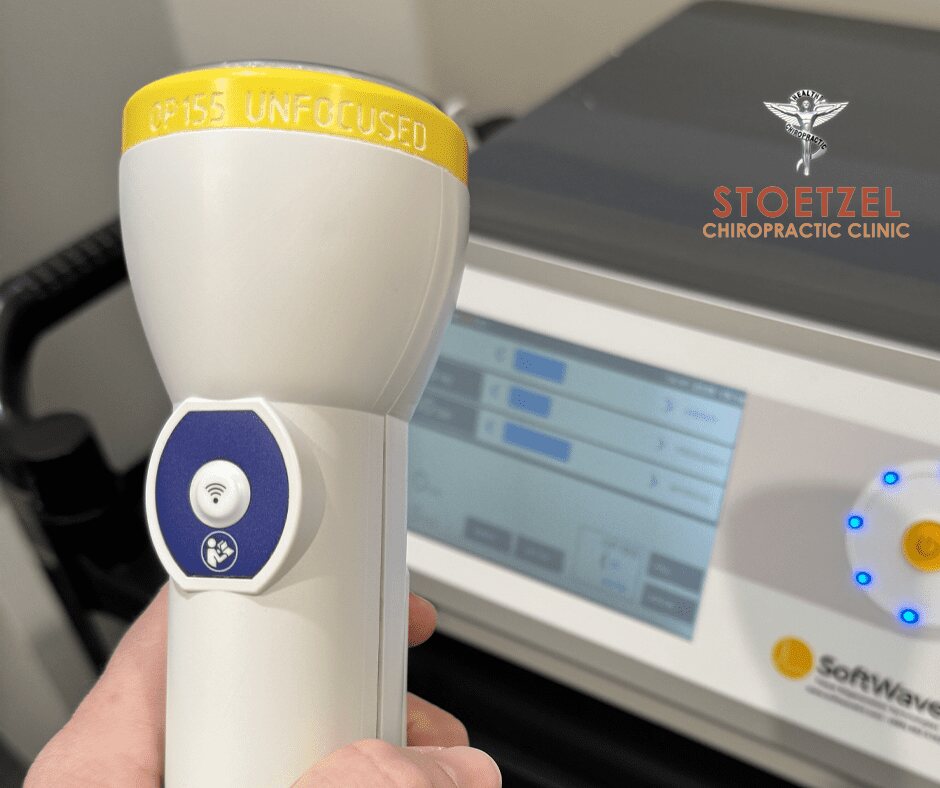
SoftWave TRT uses electrohydraulic, spark-generated broad-focused acoustic waves delivered through a patented parabolic reflector. It is the only broad-focused shockwave technology. Rather than concentrating energy on one tiny point, it covers a broad area and reaches deep into muscle and fascia. That matters for myofascial pain, because trigger points rarely exist alone. They tend to cluster within tight bands of muscle and the surrounding connective tissue.
The Science in Plain Language
- Restoring circulation. SoftWave supports a temporary increase in blood flow and, through VEGF and eNOS signaling, angiogenesis (new blood vessel growth). Better circulation helps bring oxygen and nutrients to tissue that has been starved of them.
- Calming irritated tissue. The therapy is designed to modulate inflammation, steering it toward healing instead of ongoing irritation.
- Settling over-sensitive signals. Through toll-like receptor regulation, SoftWave may help quiet the over-active immune and nerve responses that keep a sore area firing.
- Supporting repair. The waves are designed to activate resident stem cells, while PCNA and BMP activity support cell proliferation and collagen production in the connective tissue.
- Clearing worn-out cells. SoftWave can help the body clear senescent cells that may keep chronically irritated tissue from recovering.
If the same knot has been nagging you for months, schedule a SoftWave Therapy visit with Dr. John Stoetzel and find out whether this approach can help you finally move past it.
What to Expect From Treatment
Your first visit includes a conversation about your pain and daily habits and a hands-on exam to locate tight bands, tender points, and any joint restrictions. Because muscle tension sometimes signals another problem, such as a disc or nerve issue, Dr. Stoetzel will look at the bigger picture before recommending a plan.
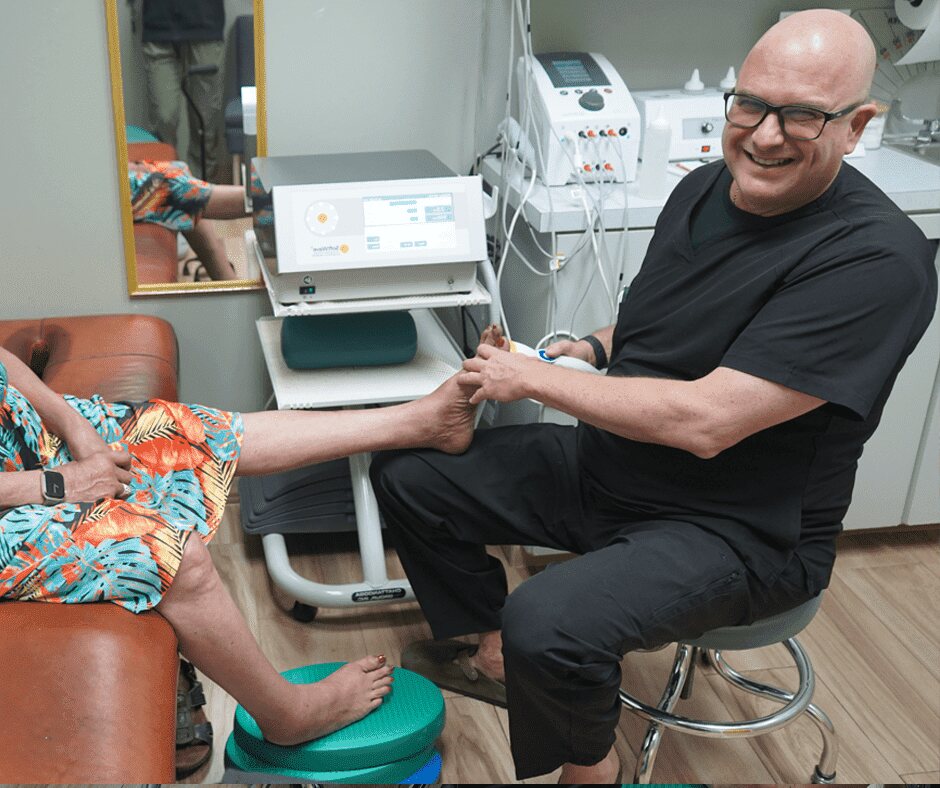
SoftWave sessions are short, typically about 10 to 15 minutes. There are no needles, no medication, and no downtime. Many patients describe a firm tapping feeling, and intensity can be adjusted to stay comfortable even over tender spots. Treatment usually involves a series of sessions over roughly six to eight weeks, and the healing response can continue for weeks to months afterward.
Realistic Expectations
Many patients report that their muscles feel looser and less tender after the first few sessions, while deeper, longstanding tension may take longer to change. Results vary, and SoftWave is not a cure-all. It works best when paired with habits that keep tension from building again:
- Regular movement breaks during long stretches of sitting.
- A workstation that keeps your screen at eye level.
- Gentle strengthening for the upper back, core, and hips.
- Better sleep and stress management.
- Chiropractic care when joint restrictions are contributing.
A Better Way to Deal With Chronic Tension
Muscle knots can feel like a small problem until they start affecting your sleep, your focus at work, and your mood. SoftWave offers a gentle, drug-free option that works with your body's natural repair process. It is FDA-cleared for activation of connective tissue, temporary increase in blood flow, and temporary relief of minor muscle and joint pain. The technology has been studied at leading institutions and is used by clinicians who work with professional and collegiate athletes.
Ready to Take the Next Step?
You do not have to keep kneading the same sore spot every night. Let Dr. Stoetzel find the source of your muscle tension and see whether SoftWave can help you feel loose and comfortable again here in Winston-Salem.
Request your SoftWave Therapy new patient visit online today
Contact Stoetzel Chiropractic Clinic
Stoetzel Chiropractic Clinic
3333 Brookview Hills Blvd, Suite 101
Winston-Salem, NC 27103
Phone: (336) 773-1177
Our Main Office Website: https://winston-salemchiro.com
‹ Back
Recent Posts
-
What FDA Clearance Means for SoftWave Therapy
November 24, 2026
-
SoftWave Therapy Myths vs Facts: What Winston-Salem Patients Should Know
November 19, 2026
-
Why SoftWave Therapy and Chiropractic Care Work Better Together
November 14, 2026
-

-
 3333 Brookview Hills Blvd