
SoftWave Therapy Blog: Pain Relief Tips from Winston-Salem
Morton's Neuroma and Ball-of-Foot Pain: A Non-Invasive SoftWave Option in Winston-Salem
Burning, Tingling, or a Pebble in Your Shoe? Morton's Neuroma Relief in Winston-Salem
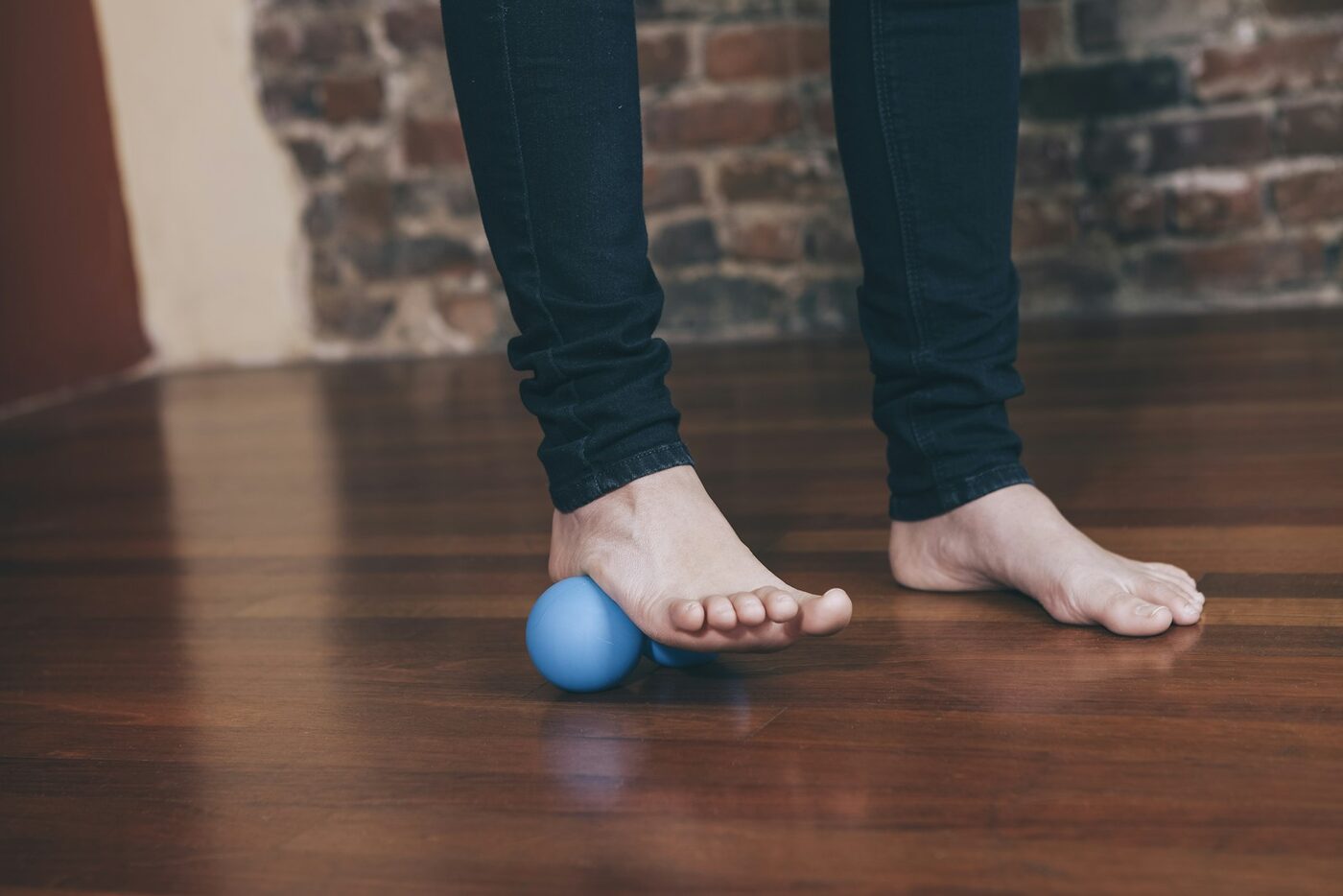
If walking across a parking lot in Winston-Salem feels like stepping on a marble, or the ball of your foot burns and tingles after a few hours in dress shoes, you may be dealing with Morton's neuroma or a related form of forefoot pain. It can quietly take away walks, workouts, and comfortable evenings out. At Stoetzel Chiropractic Clinic, Dr. John Stoetzel and his team offer SoftWave Tissue Regeneration Technology (TRT), a non-invasive option for people who want relief from ball-of-foot pain without injections or surgery.
What Is Morton's Neuroma?
Morton's neuroma is a thickening of the tissue around one of the small nerves that run between the long bones of the forefoot (the metatarsals) on their way to the toes. It most often develops between the third and fourth toes, though it can also show up between the second and third. Despite the name, it is not a tumor. It is better described as an irritated, compressed nerve wrapped in a layer of thickened, fibrous tissue.
Because that nerve sits in a tight space between bones and a connecting ligament, anything that squeezes the forefoot can pinch it repeatedly. Each time, the surrounding tissue thickens a little more and takes up more of that limited space, which is how a minor annoyance becomes a daily problem.
Common Symptoms
- A "pebble" or "bunched sock" feeling under the ball of the foot, even when nothing is there.
- Burning pain in the forefoot that may shoot into the toes.
- Tingling or numbness in two neighboring toes.
- Relief when you take your shoe off and rub the front of your foot.
- Pain that builds with longer walks, standing, or high-impact activity.
Other Causes of Ball-of-Foot Pain
Not every sore forefoot is a neuroma. Pain under the ball of the foot is often grouped under the term metatarsalgia, which simply means pain in the metatarsal region. Other possibilities include irritation of the joints at the base of the toes, inflammation of the small fluid-filled sacs (bursae) between the metatarsal heads, a strained plantar plate (a ligament under the toe joint), or a stress fracture. Some need imaging or a referral, so a proper evaluation comes first.
Why the Forefoot Gets Overloaded
Morton's neuroma and metatarsalgia tend to share the same root problem: too much pressure concentrated on a small area. Common contributors include:
- Narrow or pointed shoes that squeeze the toes together.
- High heels, which shift body weight forward onto the ball of the foot.
- Repetitive impact from running, court sports, or long shifts on hard floors.
- Foot structure, such as high arches, flat feet, bunions, or hammertoes that change how weight is spread.
- Tight calves, which can push more load onto the front of the foot with every step.
Many people in Winston-Salem spend most of the workday standing, and weekend runners and hikers on local greenways and trails load the forefoot too, so this pain is a frequent complaint.
Conventional Options and Their Limits
For some people, the basics are enough. For others, the pain lingers or keeps coming back.
- Wider shoes, pads, and orthotics. These can take pressure off the nerve, but they manage the load rather than calming tissue that is already irritated and thickened.
- Anti-inflammatory medication. Pills can take the edge off a flare, but they are a short-term tool and are not meant for daily use over months.
- Injections. Steroid or other injections can provide temporary relief for some people. The effect often wears off, and repeated injections in the foot are generally approached with caution.
- Surgery. In stubborn cases, a surgeon may release the ligament or remove the affected nerve. Surgery can help, but it involves recovery time, and removing a nerve can leave permanent numbness between the toes.
That gap between "pads and shoes" and "surgery" is where many people feel stuck.
How SoftWave Helps Ball-of-Foot Pain
SoftWave TRT uses electrohydraulic, spark-generated broad-focused acoustic waves delivered through a patented parabolic reflector. It is the only broad-focused shockwave technology, which means the energy spreads across a wider treatment zone and reaches deeper tissue, rather than concentrating on a single point near the skin. In the crowded anatomy of the forefoot, that broad coverage allows the surrounding soft tissue, ligaments, and joint structures to be addressed together.
The waves are not what heals the foot. They are the signal that prompts your body to restart its own repair process.
The Science in Plain Language
- Calming irritated tissue. SoftWave is designed to modulate inflammation, guiding it back toward a healthy pattern instead of a constant, low-grade flare.
- Quieting over-active pain signals. Through toll-like receptor regulation, the therapy may help settle the immune and nerve over-activity that keeps a sensitive area firing.
- Better circulation. Signaling molecules such as VEGF and eNOS support angiogenesis (new blood vessel growth) and a temporary increase in blood flow, bringing oxygen and nutrients to the area.
- Stem cell activation. The waves are designed to activate your body's own resident stem cells and encourage them to move to the treated tissue.
- Tissue repair. Factors such as PCNA and BMP support cell proliferation and collagen production, the building blocks of healthier connective tissue.
If burning or tingling in the ball of your foot is cutting your days short, schedule a SoftWave Therapy evaluation with Dr. John Stoetzel and find out whether this approach is a good fit for you.
What to Expect During Treatment
Your first visit starts with a conversation and an exam. Dr. Stoetzel will ask where the pain is, what makes it worse, and what you have already tried. If anything suggests a stress fracture or another issue that needs imaging or a specialist, that is addressed first.
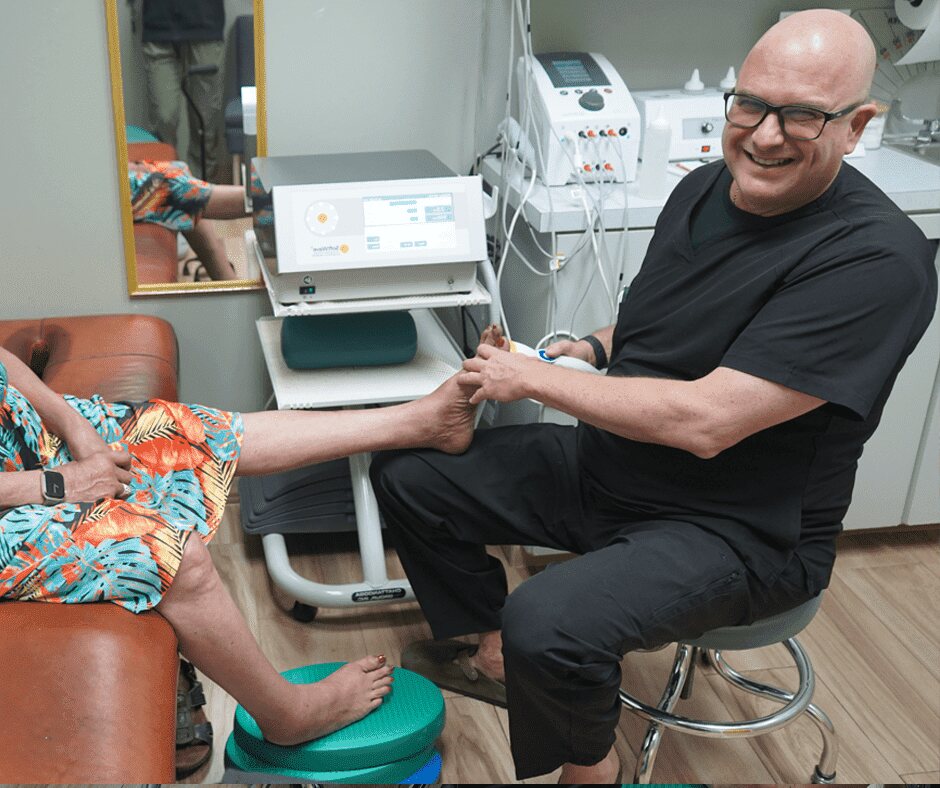
If SoftWave is a good match, sessions are short, usually about 10 to 15 minutes. There are no needles, no medication, and no downtime, so most people walk out and go right back to work or errands. A typical plan involves a series of sessions over roughly six to eight weeks. Many patients describe a tapping or pulsing feeling, and the intensity can be adjusted for comfort.
Realistic Expectations
Some people notice a change within a few sessions, others more gradually. Because SoftWave works by triggering the body's own repair process, healing can continue for weeks to months after the final session. It is not a magic eraser for a neuroma, and results vary from person to person. It works best as part of a sensible plan that also includes:
- Shoes with a wide, deep toe box and a moderate heel.
- Metatarsal pads or orthotics when they help.
- Calf and foot mobility work to reduce forefoot load.
- Smart pacing when returning to running or court sports.
Is SoftWave Right for Your Foot Pain?
SoftWave may be worth considering if ball-of-foot pain has lasted more than a few weeks, if footwear changes helped but did not resolve it, or if you want a non-invasive option before deciding on injections or surgery. SoftWave technology has been studied at leading institutions and is used by clinicians who work with professional and collegiate athletes, and it is FDA-cleared for the temporary relief of minor muscle and joint pain and for activation of connective tissue.
Learn more: SoftWave Therapy for Plantar Fasciitis and Foot Pain in Winston-Salem
Ready to Take the Next Step?
You do not have to keep shopping for the perfect shoe or cutting walks short because of that pebble feeling under your foot. Let Dr. Stoetzel evaluate your forefoot pain and help you see whether SoftWave can get you back on your feet comfortably in Winston-Salem.
Request your SoftWave Therapy new patient visit online today
Contact Stoetzel Chiropractic Clinic
Stoetzel Chiropractic Clinic
3333 Brookview Hills Blvd, Suite 101
Winston-Salem, NC 27103
Phone: (336) 773-1177
Our Main Office Website: https://winston-salemchiro.com
‹ Back
Recent Posts
-
What FDA Clearance Means for SoftWave Therapy
November 24, 2026
-
SoftWave Therapy Myths vs Facts: What Winston-Salem Patients Should Know
November 19, 2026
-
Why SoftWave Therapy and Chiropractic Care Work Better Together
November 14, 2026
-

-
 3333 Brookview Hills Blvd