


SoftWave Therapy Blog: Pain Relief Tips from Winston-Salem
Biceps Tendinitis and Front-of-Shoulder Pain: A Non-Surgical SoftWave Approach

Why Does the Front of My Shoulder Hurt? Biceps Tendinitis Relief in Winston-Salem
If you feel a deep ache at the front of your shoulder every time you lift a gallon of milk, reach into the back seat, or toss a ball for the dog, the problem may not be your rotator cuff at all. A very common source of front-of-shoulder pain is the long head of the biceps tendon, a narrow cord of tissue that runs up the front of the arm and into the shoulder joint. When that tendon becomes irritated and worn, everyday movements can turn into a steady reminder that something is not right.
At Stoetzel Chiropractic Clinic in Winston-Salem, NC, Dr. John Stoetzel and his team help patients work through stubborn shoulder pain with SoftWave Tissue Regeneration Technology (TRT). This non-invasive, drug-free therapy is designed to support the body's own repair process in tendons that have stopped healing on their own.
What Is Biceps Tendinitis?
Your biceps muscle has two upper attachments. The short head anchors to a bony point on the shoulder blade, and the long head travels up through a shallow channel at the top of the upper arm bone, called the bicipital groove, before attaching near the top of the shoulder socket. Because the long head tendon slides back and forth in that groove every time you move your arm, it is exposed to a great deal of friction and load over a lifetime.
Biceps tendinitis describes irritation and inflammation of that tendon. In many adults, the problem is better described as tendinopathy, meaning the tendon has gradually lost its healthy, organized structure after months or years of repeated strain. The fibers become thickened and disorganized, the tendon tolerates load poorly, and pain shows up with lifting, reaching, and overhead activity.
Common Signs of Front-of-Shoulder Tendon Pain
- A deep ache at the front of the shoulder that may travel slightly down the upper arm.
- Tenderness when pressing on the front of the shoulder, right over the groove where the tendon runs.
- Pain with lifting, carrying, or pulling, especially with the palm facing up or the elbow bent.
- Discomfort with overhead reaching, throwing, or reaching behind you.
What Causes It?
Biceps tendon problems usually develop from repetition rather than a single dramatic moment. Overhead work, lifting at the gym, swinging a racquet or golf club, and throwing can all add up. Age also matters, because tendons naturally become less resilient over time and have a limited blood supply to begin with.
The biceps tendon also rarely gets irritated in isolation. It sits right beside the rotator cuff, and the two often share the workload. Shoulder impingement, rotator cuff tendon irritation, rounded posture, and a stiff upper back can all change how the shoulder moves and place extra stress on the biceps tendon. That is why a careful exam of the whole shoulder, neck, and upper back matters so much.
When Front-of-Shoulder Pain Needs a Closer Look
A sudden pop followed by bruising and a bulge in the upper arm can mean the tendon has ruptured. Significant weakness, numbness, or pain after a fall should also be evaluated promptly. Dr. Stoetzel screens for these warning signs and will recommend imaging or a medical referral when appropriate.
Conventional Options and Their Limits
Most people with biceps tendinitis start with conservative care, and each option has a place.
- Rest and activity changes can calm an irritated tendon, but a chronic tendon with poor circulation often does not rebuild itself simply because you stopped using it.
- Ice and anti-inflammatory medication may ease pain for a while, yet they do not restore healthy tendon structure.
- Physical therapy and exercise are valuable for strength and shoulder mechanics, but progress can stall if the tendon itself stays painful and irritable.
- Corticosteroid injections can bring strong short-term relief, though they do not repair the tendon, and repeated injections into tendon tissue are a concern for many physicians.
- Surgery, such as tenodesis or tenotomy, may be recommended when conservative care fails or the tendon is badly damaged. It can help, but it comes with anesthesia, a recovery period, and time away from work and activities.
For many people, the frustrating part is the in-between stage: the pain is too persistent to ignore, but surgery feels like too big a step.
How SoftWave Helps Biceps Tendinitis
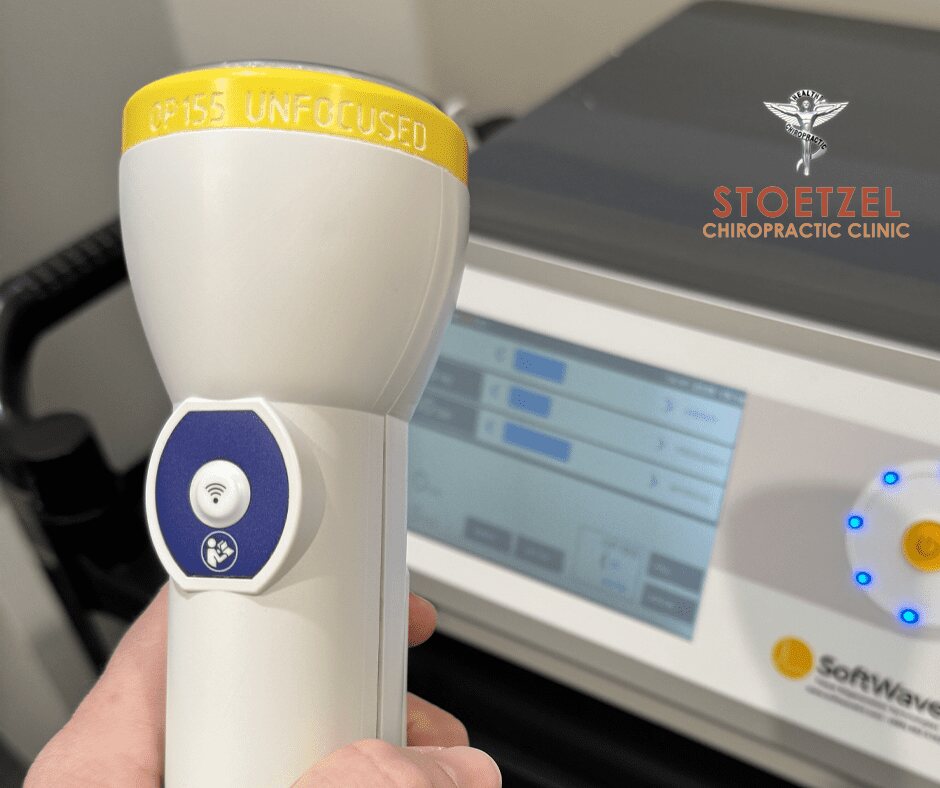
SoftWave TRT uses electrohydraulic, spark-generated broad-focused acoustic waves delivered through a patented parabolic reflector. It is the only broad-focused shockwave technology, which means the energy is spread across a wider treatment area and can reach deep tissue rather than concentrating on a tiny point near the surface. That matters because the biceps tendon sits under muscle and alongside the rotator cuff.
If front-of-shoulder pain is getting in the way of your workouts, your job, or simply reaching the top shelf, schedule a SoftWave Therapy consultation with Dr. John Stoetzel in Winston-Salem.
The Science in Plain Language
- New blood flow: SoftWave is designed to promote angiogenesis, the growth of new blood vessels, through signals such as VEGF and eNOS. Tendons are notoriously low on blood supply, so better circulation can help bring in the oxygen and nutrients repair requires.
- Your own repair cells: The therapy can activate resident stem cells and encourage them to migrate toward the injured tissue.
- Rebuilding collagen: Factors like PCNA and BMP support cell proliferation and collagen production, which tendons rely on to regain strength and organization.
- Balanced inflammation: Rather than shutting inflammation off, SoftWave helps steer it toward a productive healing pattern.
- Quieter pain signaling: Through toll-like receptor regulation, the therapy may help settle overactive nerve and immune responses.
- Clearing worn-out cells: SoftWave may help the body clear senescent cells that keep a chronic tendon stuck in an unhealed state.
What to Expect During Treatment
Your first visit begins with a conversation about your symptoms and a hands-on exam of the shoulder, neck, and upper back, so treatment is aimed at the right structures.
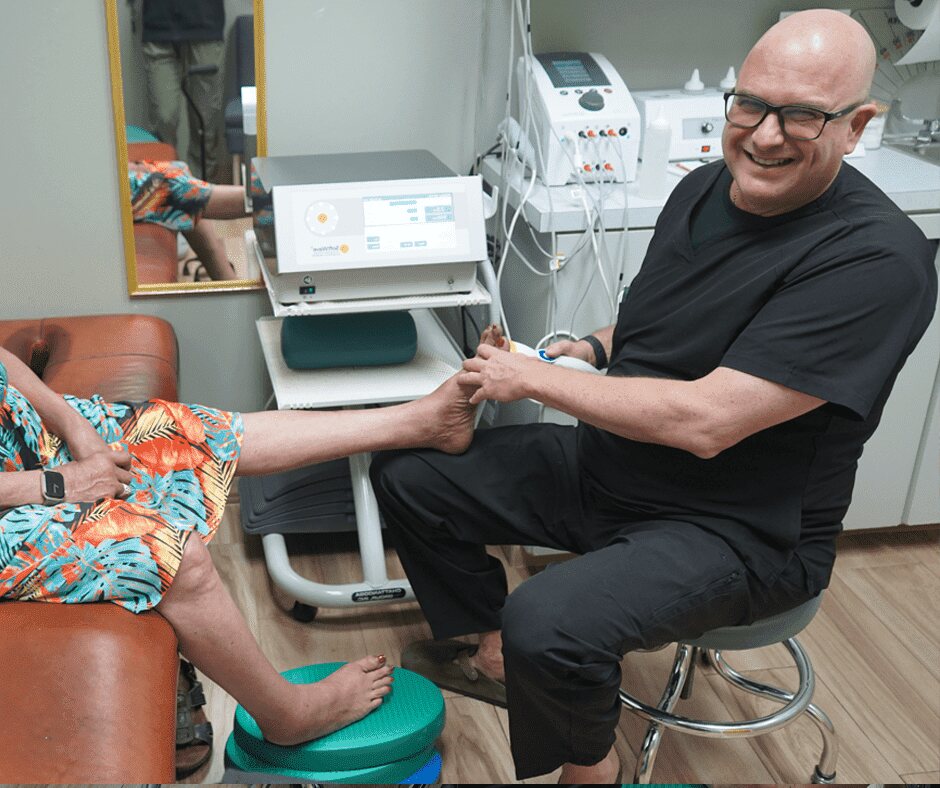
- Short sessions: Each SoftWave session usually takes about 10 to 15 minutes.
- Nothing invasive: There are no needles, no drugs, no incisions, and no downtime. Most people return to normal daily activities right away.
- A series of visits: Treatment is typically delivered as a series over roughly six to eight weeks.
- Healing that continues: Because SoftWave is designed to stimulate a biological repair process, improvement often continues for weeks to months after the final session.
Many patients report noticeable relief within the first few sessions, while others see more gradual change as the tendon remodels. Results vary from person to person, and no therapy can promise a specific outcome. Your care plan may also include chiropractic adjustments, posture work, and targeted exercises so the tendon is not overloaded again. Keeping heavy loads close to your body and returning to the gym or the golf course gradually can help protect your progress.
Biceps tendinitis is common, but it does not have to become a permanent part of your life. With an accurate diagnosis and a treatment designed to support real tissue repair, many people in Winston-Salem are able to move toward lifting, reaching, and playing with less pain.
Learn more: SoftWave Therapy for Shoulder Pain in Winston-Salem
Ready to Take the Next Step?
If the front of your shoulder has been aching for weeks or months, there is no reason to keep guessing or waiting for it to resolve on its own. Let Dr. Stoetzel evaluate your shoulder and see whether SoftWave Therapy is a good fit for you.
Request your SoftWave Therapy new patient visit online today
Contact Stoetzel Chiropractic Clinic
Stoetzel Chiropractic Clinic
3333 Brookview Hills Blvd, Suite 101
Winston-Salem, NC 27103
Phone: (336) 773-1177
Our Main Office Website: https://winston-salemchiro.com
‹ Back
Recent Posts
-
What FDA Clearance Means for SoftWave Therapy
November 24, 2026
-
SoftWave Therapy Myths vs Facts: What Winston-Salem Patients Should Know
November 19, 2026
-
Why SoftWave Therapy and Chiropractic Care Work Better Together
November 14, 2026
-

-
 3333 Brookview Hills Blvd