
Blog
SoftWave vs Traditional Radial Shockwave: Why Broad-Focused Technology Matters
Not All "Shockwave" Is the Same: What Winston-Salem Patients Should Know Before They Shop Around
If you have been researching shockwave therapy for a stubborn injury or chronic joint pain, you have probably noticed that the word "shockwave" gets used to describe several very different machines. The confusion is understandable, because the term covers a whole family of acoustic wave devices that work in different ways and reach tissue at different depths. Understanding those differences is one of the most useful things you can do before you spend money on treatment.
At Stoetzel Chiropractic Clinic in Winston-Salem, NC, Dr. John Stoetzel and his team use SoftWave Tissue Regeneration Technology (TRT), a broad-focused electrohydraulic shockwave system that is distinct from the radial and focused devices many people picture when they hear the word. This article explains the categories of acoustic wave therapy, what "broad-focused" actually means, and why the depth and coverage of the wave matter so much when the goal is to reach injured tissue and support the body's own healing.
The Categories of Acoustic Wave Therapy
Acoustic wave therapy is not one technology. It is a group of technologies that all send mechanical energy into the body, but they generate and shape that energy in fundamentally different ways. There are four main approaches you are likely to encounter.
Radial Pressure-Wave Devices
Radial devices, sometimes marketed simply as "shockwave," are technically pressure-wave systems. A projectile inside a handpiece is fired at a metal applicator, and the impact sends a pressure wave into the body. These waves are strongest right at the surface of the skin and lose energy quickly as they travel inward. Radial technology can be useful for superficial, soft-tissue complaints, but its energy is concentrated near the surface and disperses as it goes deeper. That is a meaningful limitation when the actual problem sits well below the skin.
Electromagnetic Focused Devices
Focused electromagnetic systems use a coil and membrane to generate a wave that is then aimed at a specific, narrow point deep in the tissue. The energy can reach a considerable depth, but it is concentrated on a small focal zone. Think of it as a precise beam rather than a wide field. Reaching that exact point often requires imaging or careful targeting, and the treated area at any given moment is quite small.
Piezoelectric Devices
Piezoelectric systems use an array of crystals that expand rapidly when an electric charge is applied, producing an acoustic wave that converges on a tightly defined focal point. Like electromagnetic focused devices, the strength here is precision on a very small target, which again means the coverage area is narrow.
SoftWave's Electrohydraulic Broad-Focused Technology
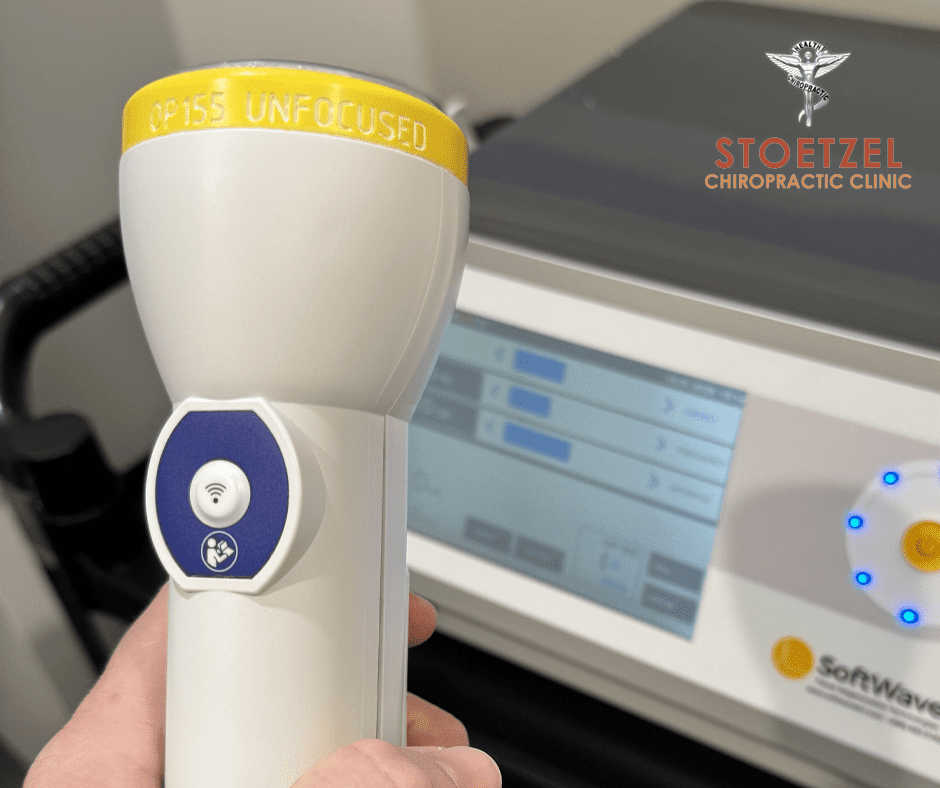
SoftWave TRT belongs to a different category. It uses an electrohydraulic, spark-generated shockwave delivered through a patented parabolic reflector. Rather than concentrating energy on a pinpoint or dumping it near the surface, the reflector spreads the true shockwave over a wider, deeper treatment area. It is the only broad-focused shockwave technology, and that distinction is the heart of why patients notice a difference.
What "Broad-Focused" Actually Means
The easiest way to picture the difference is to think about how a wave is shaped after it is created. A narrow focused device is like a spotlight aimed at a single small dot. A shallow radial wave is like water splashed against a wall that spreads out but never gets deep. SoftWave's broad-focused approach is different: the patented parabolic reflector takes the spark-generated shockwave and redirects it so that it covers a broad, three-dimensional volume of tissue while still penetrating to a useful depth.
In other words, broad-focused means you do not have to hit one exact millimeter to get a therapeutic effect, and you are not limited to the surface either. The wave treats a meaningful region of tissue at a clinically relevant depth in a single pass. For a real-world injury, where the damaged tissue is rarely a single tidy point and often spreads across tendons, ligaments, muscle, and the small blood vessels around them, that combination of width and depth is exactly what you want.
Why Depth and Coverage Matter
Here is the practical problem with a narrow or shallow wave: the injured tissue you are trying to help may not sit where the energy actually lands. A pinpoint focal zone can miss the affected area if targeting is even slightly off, and a shallow radial wave may never reach a deep tendon insertion or joint structure at all. Energy that does not reach the injury cannot help it heal.
Depth matters because many of the conditions people seek help for, such as chronic tendon problems, joint pain, and long-standing soft-tissue injuries, involve structures that are simply not close to the skin. Coverage matters because healing is a regional process, not a single-point event. When a broad-focused wave reaches a wider, deeper zone, it can stimulate the surrounding tissue and blood supply the recovery process depends on. This is why the shape of the wave is not a marketing detail.
If you are comparing shockwave options in Winston-Salem, you do not have to guess which technology fits your problem. Request a SoftWave Therapy consultation with Dr. John Stoetzel today.
How SoftWave Therapy Supports the Body's Healing Cascade
Reaching the tissue is only the first step. What makes SoftWave distinct is what the broad-focused wave is designed to trigger once it arrives: the body's own regenerative response. The mechanical energy acts as a signal that can wake up dormant repair processes in a wider field of tissue at once.
The Science in Plain Language
- Stem cell activation: The wave is designed to activate and encourage migration of the body's own resident stem cells toward the treated area, supporting natural repair.
- Angiogenesis (new blood flow): SoftWave may promote the growth of new blood vessels through signaling molecules such as VEGF and eNOS, which can improve circulation to tissue that has been starved of a healthy blood supply.
- Cell proliferation and tissue repair: Expression of factors like PCNA and BMP can support cell growth and the rebuilding of collagen and connective tissue.
- Inflammation modulation: The therapy is designed to help calm excess inflammation rather than simply mask it.
- Nerve and immune calming: Regulation of toll-like receptors may help quiet nerve and immune over-activity.
- Clearing damaged cells: SoftWave can support the clearance of senescent, aging or damaged cells so healthier tissue has room to recover.
Because a broad-focused wave engages a wider, deeper region of tissue, it has the opportunity to stimulate this regenerative cascade across the whole injured area rather than one narrow point. That is the core reason the technology category matters when the true goal is healing rather than temporary numbing.
What to Expect and Why It Is Worth Understanding the Difference
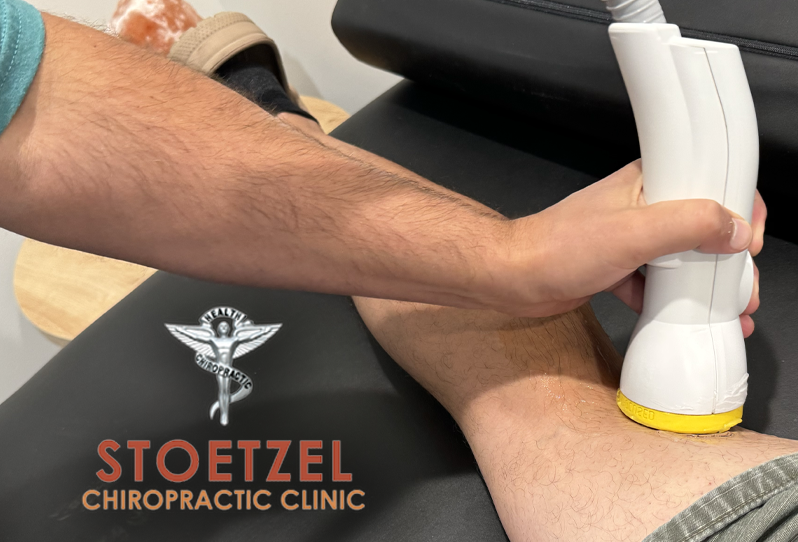
SoftWave sessions are non-invasive, with no needles, no drugs, no surgery, and no downtime. Individual sessions typically last around 10 to 15 minutes, and most patients complete a series of treatments over roughly six to eight weeks. Because the therapy works by stimulating your own biology, healing often continues for weeks to months after the final session as the repair processes keep working. SoftWave technology has been studied at leading medical institutions and is used by clinicians who work with professional and collegiate athletes.
None of that means SoftWave is a cure or a substitute for medical advice, and results vary from person to person. What it does mean is that when a patient is shopping around, the label on the door is not enough. Two clinics can both say "shockwave" and be offering very different technology with very different reach into the body. Knowing that broad-focused, depth-reaching treatment exists lets you ask better questions and make a more informed choice for your own recovery.
Ready to Take the Next Step?
If you are weighing your shockwave options in Winston-Salem, the smartest move is to learn which technology actually fits your injury before you commit. Dr. John Stoetzel and his team are glad to walk you through whether SoftWave TRT is right for you.
Request your SoftWave Therapy new patient visit online today
Contact Stoetzel Chiropractic Clinic
Stoetzel Chiropractic Clinic
3333 Brookview Hills Blvd, Suite 101
Winston-Salem, NC 27103
Phone: (336) 773-1177
Our Main Office Website: https://winston-salemchiro.com
‹ Back



 3333 Brookview Hills Blvd