
Blog
Does SoftWave Therapy Hurt? What a Treatment Session Actually Feels Like
Does SoftWave Therapy Hurt? What a Treatment Session Actually Feels Like
If you are considering a new therapy for stubborn pain, one question usually comes up before any other: is this going to hurt? It is a fair thing to ask. Many people in Winston-Salem have already tried treatments that were uncomfortable, invasive, or slow to recover from, so a little skepticism is healthy. The good news is that SoftWave Therapy is a non-invasive option, and most patients tolerate a session comfortably. This article walks you through what a treatment actually feels like, why some spots feel more sensitive than others, and how the experience compares to options like injections or surgery.
At Stoetzel Chiropractic Clinic in Winston-Salem, NC, Dr. John Stoetzel and his team use SoftWave Tissue Regeneration Technology (TRT) to help patients address the source of their pain without needles, drugs, or surgery. Being honest about the experience matters to us, so rather than promise you will feel nothing at all, we want to set clear and realistic expectations so you can walk in prepared and relaxed.
What a SoftWave Session Actually Feels Like
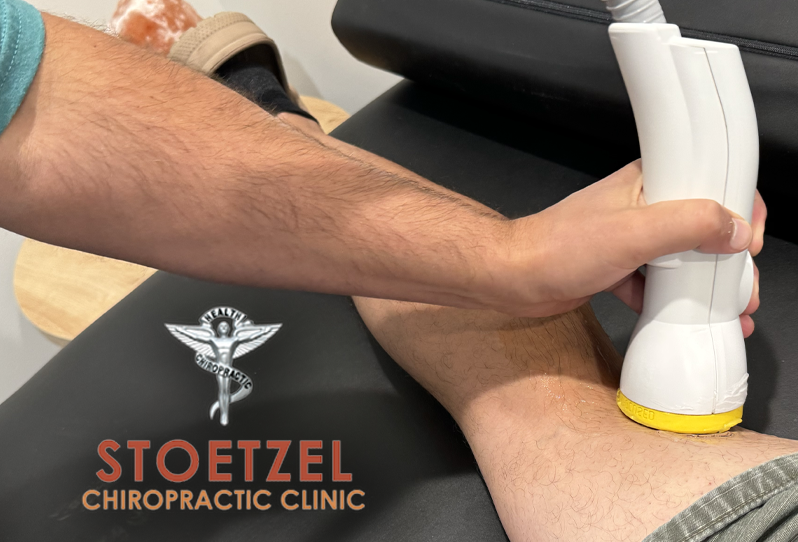
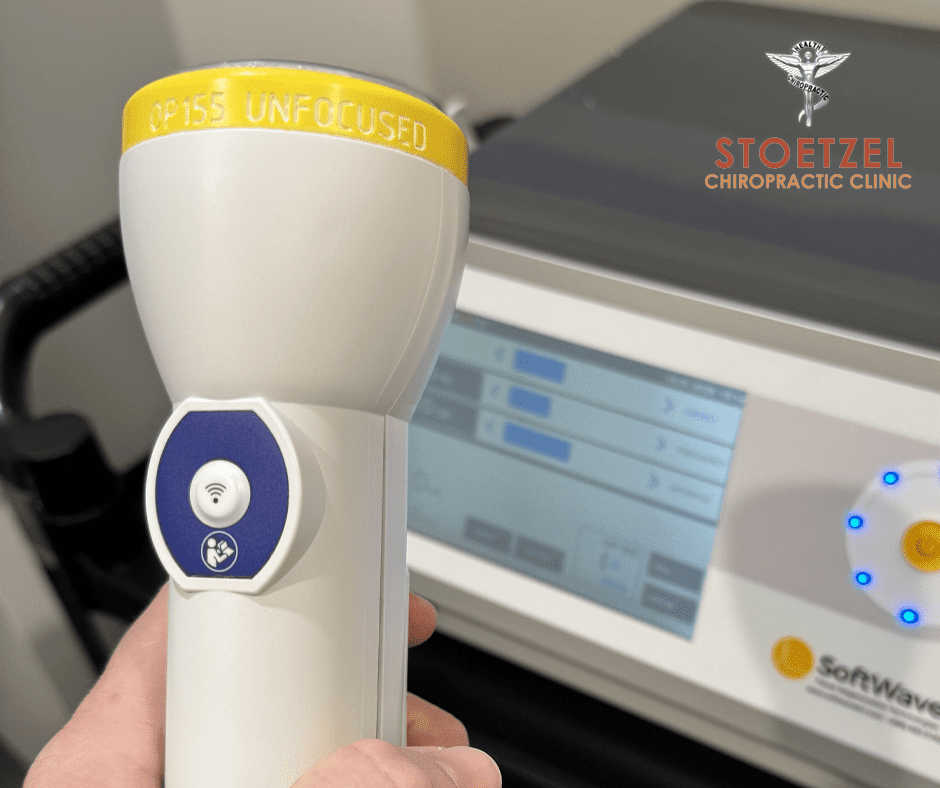
SoftWave TRT delivers broad-focused acoustic waves into the tissue through a handheld applicator that rests against your skin. As the device works, most patients describe the feeling as a tapping or pulsing sensation. Some compare it to a light, rhythmic knocking that moves across the treatment area. There is no needle, no incision, and no numbing agent required. You stay fully clothed in most cases, sit or lie comfortably, and remain awake and talking the entire time.
A typical session is short, often in the range of about 10 to 15 minutes, so even if a particular spot feels intense, the sensation does not last long. Dr. Stoetzel and his team can adjust the intensity as the session goes, which means the treatment can be dialed to a level you are comfortable with rather than pushed past your tolerance.
Why Some Areas Feel More Sensitive Than Others
Here is something worth knowing before your first visit: the therapy tends to feel more noticeable exactly where the problem is. As the applicator passes over healthy tissue, the pulsing usually feels mild and easy to ignore. When it reaches an area of injury, inflammation, or long-standing tension, that same pulse can feel more sensitive or tender. This is not a sign that something is going wrong. In many cases it actually helps Dr. Stoetzel locate the tissue that needs attention. Patients often say the device seems to find the problem area on its own.
That heightened sensitivity is generally brief and stays within a manageable range for most people. If a spot feels like too much, you simply say so, and the intensity is adjusted. The goal is a productive session, not an endurance test.
How SoftWave Therapy Helps, and Why It Feels the Way It Does
Understanding what the waves are doing inside the body can make the sensation easier to accept. SoftWave TRT uses electrohydraulic, spark-generated acoustic waves delivered through a patented parabolic reflector. Unlike radial pressure-wave devices, SoftWave produces broad-focused waves that penetrate deep into tissue and are designed to trigger the body's own repair response. That mechanical energy is exactly what you feel as the tapping sensation.
The Science in Plain Language
- Waking up resident stem cells: The therapy is designed to activate and encourage the migration of the body's own repair cells toward damaged tissue.
- Improving circulation: It can support angiogenesis, the growth of new blood vessels, which may increase blood flow to areas that have struggled to heal.
- Supporting tissue repair: The waves are associated with cell proliferation and collagen formation that help the body rebuild.
- Calming inflammation and irritated nerves: SoftWave may help modulate inflammation and quiet over-active nerve and immune signaling.
- Clearing out damaged cells: The process can support the removal of aging, worn-out cells so healthier tissue has room to recover.
Because these are biological processes, much of the benefit continues after you leave. Many patients complete a series of treatments over roughly 6 to 8 weeks, and the body's repair activity can keep working for weeks to months following the final session.
No Downtime, No Anesthesia, No Recovery to Plan Around
One of the most reassuring parts of SoftWave Therapy is what happens after the session ends: essentially nothing that disrupts your day. There is no anesthesia to wear off and no downtime to schedule around. Most patients get up and return to their normal routine right away, whether that means heading back to work, running errands in Winston-Salem, or picking up the kids.
Some people feel a little tenderness or mild soreness in the treated area afterward, a bit like the feeling after a good workout or a deep massage. This is usually short-lived. Many patients also notice a sense of relief or looser movement soon after a session, though everyone responds differently and results build over the course of a treatment plan rather than in a single visit.
If you are curious about a non-invasive path to relief in Winston-Salem, you do not have to keep pushing through the pain or bracing for a painful procedure. Request a SoftWave Therapy consultation with Dr. John Stoetzel today.
How the Comfort Compares to Injections and Surgery
When patients weigh SoftWave against other options, comfort and recovery are often where the difference stands out the most. Consider what is involved with the alternatives:
- Compared to injections: There are no needles with SoftWave and no numbing shot beforehand. You avoid the pinch, the pressure of the injection itself, and the uncertainty that can come with repeated injections.
- Compared to surgery: Surgery involves anesthesia, incisions, and a recovery period that can stretch for weeks or longer, sometimes with physical therapy afterward. SoftWave requires none of that. You walk in, complete a short session, and walk out.
- Compared to strong medications: SoftWave is drug-free, so you are not managing side effects, drowsiness, or the concerns that come with long-term pain medication use.
None of this means SoftWave is the right answer for every condition, and it is not a substitute for professional medical advice. Dr. Stoetzel will evaluate your situation and be straight with you about whether the therapy is a good fit. What we can say honestly is that for comfort during treatment and simplicity of recovery, SoftWave compares very favorably to more invasive options.
What to Expect at Your First Visit
On your first appointment, Dr. Stoetzel takes time to understand your history and pinpoint the areas causing trouble. The applicator is placed against the target area, the treatment begins at a comfortable intensity, and adjustments are made based on your feedback. You will feel the pulsing move across the tissue, more noticeably over the problem spots, and the whole session wraps up in a matter of minutes. Afterward you are free to go about your day. It really is that straightforward.
Being informed is the best way to walk in relaxed. Knowing that the sensation is a manageable tapping, that tender spots are expected and even useful, and that there is no downtime to worry about tends to put most people at ease before they ever sit down.
Ready to Take the Next Step?
If concerns about pain or a long recovery have been holding you back, a short and non-invasive SoftWave session may be far more comfortable than you expect, and Dr. Stoetzel is happy to answer your questions before you ever begin. Take the first step toward relief on your terms.
Request your SoftWave Therapy new patient visit online today
Contact Stoetzel Chiropractic Clinic
Stoetzel Chiropractic Clinic
3333 Brookview Hills Blvd, Suite 101
Winston-Salem, NC 27103
Phone: (336) 773-1177
Our Main Office Website: https://winston-salemchiro.com
‹ Back


 3333 Brookview Hills Blvd